The Worst Meta Habits in 15k CS Rating Games Right Now

I’ve lost count of how many 15k CS Rating games I’ve watched where the round starts clean, then somebody throws it away by dry peeking a Scout angle at 1:45 or saving a full-buy AK on 0:39 because they’re “low confidence.” That’s the 15k trap. People are good enough to know the basics, but not disciplined enough to stop doing the dumb stuff that keeps bleeding rounds.

At this rating, you’re not getting farmed by raw mechanics every round. You’re getting punished by bad habits. Source 2 and subtick didn’t fix that. If anything, the new feel made some players even lazier about timing, spacing, and teamplay — which is hilarious, because the teams winning Majors and ranking up fast are doing the exact opposite.

The biggest problem: everyone thinks they’re the carry

15k is where ego starts to rot the lobby. One guy saw donk rip heads off at the Shanghai Major and now he thinks every T side should be a solo B ramp swing. Another watched m0NESY hit a crazy AWP flick and decides he should wide peek Mirage window with no flash, every single round, like that’s a real strat and not just expensive suicide.

The meta habit here is simple: players overvalue opening duels and undervalue round structure. You can feel it on maps like Mirage, Inferno, and Ancient. CTs keep giving up mid control for free, then complain about “no rotations” when they’re 2v4 on the wrong side of the map. Ts burn 30 seconds staring at nothing, then explode into the only stacked site like they’ve got a script from 2018.

Dry peeking is still ruining games

This one never dies. In 15k, people still swing angles like the enemy is blind, broke, and asleep. They’re not. Even with subtick making inputs feel cleaner than old 64-tick nonsense, a clean counter-strafe doesn’t save you from being predictable.

Bad peeks show up everywhere:

  • Mirage mid: walking into connector with no flash, then acting shocked when an AWP takes your face off.
  • Inferno banana: solo-swinging logs against a teammate holding top banana, which is basically gifting first contact.
  • Nuke lobby: wide peeking outside while your team hasn’t even taken garage pressure.
  • Anubis B main: dry running through a smoke like you’re trying to speedrun a highlight reel.

What should happen instead? Trade for info. Use a flash. Take space with a second body. The whole point is to make the duel unfair in your favor, not to feed the other side a free CS Rating donation.

The economy mistakes are somehow worse than the aim

Here’s the part that drives me insane: players at 15k know the gun prices, but they still buy like they’re on autopilot. You’ll see a team force on round 2 after losing pistol, end up with two Deagles, three half-armors, and one random MP9, then wonder why they’re broke on round 4. It’s not mysterious. It’s just bad math.

CS2 economy still punishes sloppy decisions hard. If your team has $2,000-ish after a lost pistol and you dump everything into a fake “force,” you’re usually not getting a real buy until the round after next, and by then the CTs have a full utility stack and a 4-round lead. That’s not a comeback plan. That’s donating map control.

The worst version is the fake confidence buy: one AK, four pistols, zero nades, and everyone insisting it’s winnable because “we aim.” Sure, and s1mple can probably. You can’t. Not in a lobby where half the teams are playing retake setups like they actually watched a pro demo this year.

Utility gets thrown like it’s a cooldown, not a weapon

Utility in 15k is a mess. Molotovs get tossed at random walls. Smokes are used for vibes instead of timing. Flashbangs pop at teammates’ feet. It’s like people forgot a grenade costs real money, and each bad piece of utility can swing a round more than a flashy aim duel ever will.

On Inferno, a proper banana fight should start with contesting top banana, then maybe a second molly to keep CTs honest. On Mirage, top-mid pressure without connector or window utility is just a gift to the defense. On Ancient, a good mid take needs at least one smoke and a flash to stop those free AWP lines. That’s not theorycraft. That’s baseline play.

Pros don’t win by “just going.” ZywOo isn’t carrying because he spams push buttons and hopes for the best. He gets space because his team understands utility timing, spacing, and what the other side can actually afford to contest. Your 15k stack should stop treating utility like optional decoration.

Over-rotating is basically a team-wide panic attack

Once a team in this rating gets a little nervous, the map starts falling apart. One footstep on A? Three guys rotate. One smoke pops B? Suddenly the anchor is alone, the lurker is dead, and the bombsite has been abandoned like the match just turned into a deathmatch server.

This is especially bad on Nuke and Vertigo, where rotation timing matters a ton. If you leave ramp on a fake too early, congratulations, you’ve made the T side’s life easier. If you triple-rotate on Dust2 after one mid flash, you’ve basically told the other team to hit the open site and plant for free.

Good teams hold their nerve. They let info breathe. They understand that a footstep at 1:10 doesn’t mean the bomb is about to land on site. It might just be a lurk, a probe, or some kid trying to bait reactions. You don’t need four players sprinting through choke points every time somebody sneezes.

There’s still way too much fake confidence in clutches

Clutches at 15k are weird. Half the players are too scared to move, and the other half play like every 1v2 is a YouTube montage title. Both are bad. The real mistake is not reading the round. If the bomb is down on A and you know the last two Ts are low on nades, why are you sitting in CT spawn staring at the sky?

Clutching is mostly information and timing. If you’ve got a 1v2 and one enemy already showed on short, you need to isolate the other player, not sprint at both of them with a USP like it’s 2015. The best clutchers in the pro scene do this constantly — tiny pathing choices, tiny sound cues, tiny pauses. That’s why they make “impossible” rounds look routine.

At 15k, the bad habit is the opposite: panic-swinging, never counting util, never checking the clock. If you don’t know whether the last T can even make the bomb, you’re not playing the clutch. You’re just guessing loudly.

What actually wins these games

If you want out of the 15k swamp, stop chasing hero plays and start being annoying in the right ways.

  • Trade every duel.
  • Respect the economy.
  • Use utility to start fights, not decorate them.
  • Stop rotating off one sound cue like it’s gospel.
  • Play the clock when you have the man advantage.

Sounds basic, because it is. That’s the annoying part. Most 15k games aren’t decided by some hidden subtick trick or a mystical Premier rating conspiracy. They’re decided by the team that makes fewer stupid decisions for 24 rounds straight.

So next time your lobby starts telling itself it “just needs aim,” ask one blunt question: if the aim is so good, why are you still losing every round you give away for free?
4 Ways Pros Clear Overpass Bathrooms Without Wasting Utility

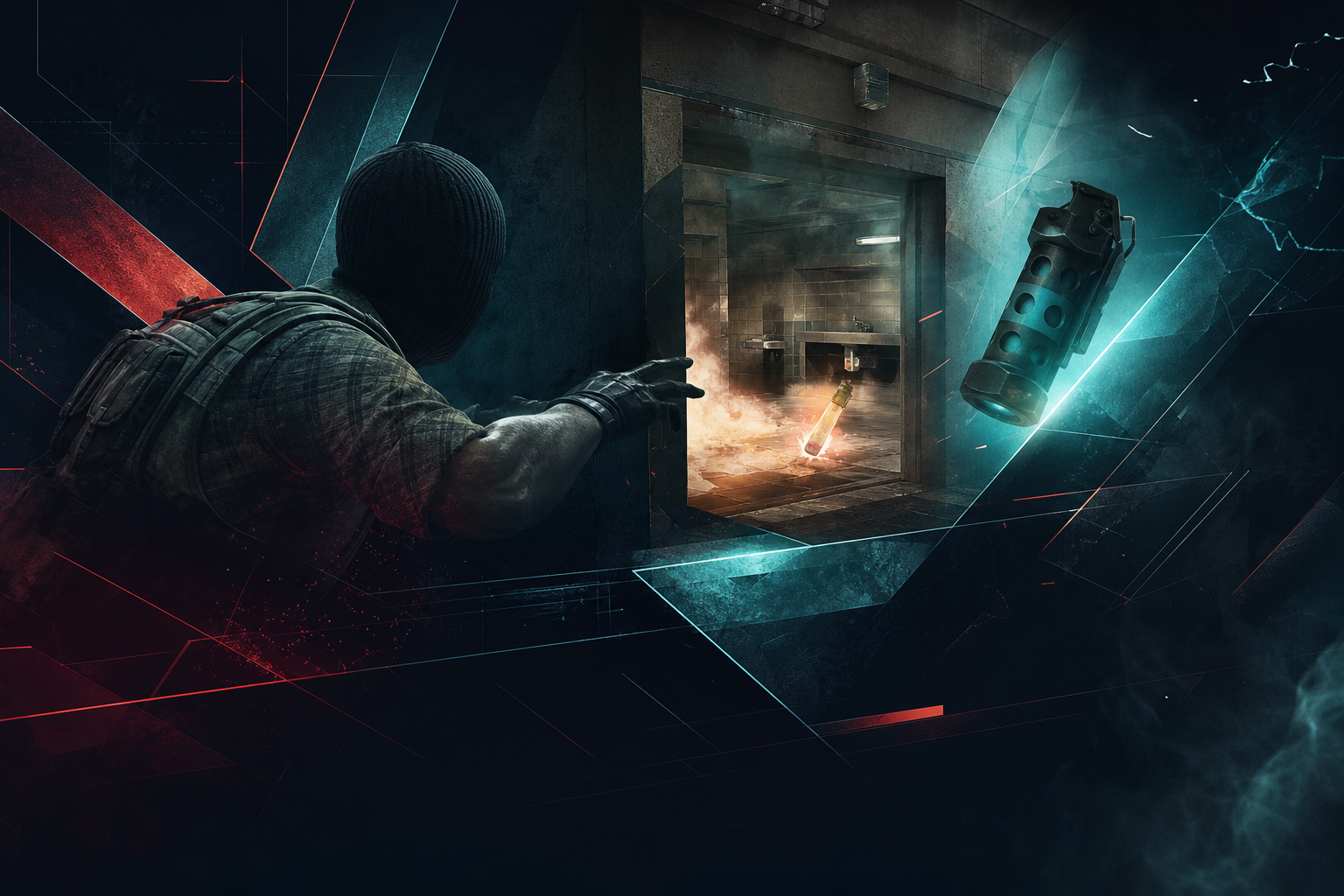
Bathrooms on Overpass are one of those spots that look free until you get deleted by a guy tucked behind the sink with a flash still coming out of his hand. You burn a molly, toss a flash, maybe even dump a second piece of utility, and somehow the CTs still keep the space. That’s the problem: most teams waste nades because they clear Bathrooms like it’s a generic “smoke and swing” room, when the fight is actually a chain of tiny angles, timings, and sound cues.

If you want to play Overpass properly in CS2, Bathrooms isn’t about brute force. It’s about making the CT give up info for free, then taking the room with the least possible utility tax. On Source 2 with subtick, you can’t rely on sloppy old-school timing as much as you could in CS:GO. The peek is cleaner, the shoulder bait is meaner, and if you’re late by half a beat, a player like m0NESY will punish you before your flash even pops.

Why Bathrooms is such a pain

Bathrooms sits in that ugly middle ground between map control and a full site hit. On Overpass, it’s close enough to A that CTs can play aggressive and still fall back, but far enough from Terrorist spawn that your entry stack is usually half a second behind if your timings are lazy. That’s why teams from the Pro League and Major qualifiers keep treating it like a mini-map inside the map.

The real issue is that there are three common CT looks, and all of them can eat your utility if you’re careless:

  • the close-left jiggle from the bathroom entrance,
  • the deep line from the stall side or graffiti-adjacent angle,
  • the late peek from Party or Fountain support.

Waste two flashes on empty space and you’ve basically paid 800 dollars to hear “they’re not here” in voice chat.

1. Clear the first corner with a contact jump, not a panic flash

The cleanest way to take Bathrooms is often just two players moving up on contact, with one player shoulder-peeking the first threat and the second ready to trade. No hero utility. No “full send” stuff. Just pressure. If the CT in close-left is holding for a dry swing, a contact jump or a tight walk-up often forces the shot early, and once they fire, they’re usually dead if your trade spacing is right.

This works because CTs love overcommitting to the first duel in Bathrooms. They know T-side players panic and throw utility early, so they sit there waiting for the line of smoke or the flash pop. Don’t give them that. If you’re taking a round with an AK and a Deagle in the mix, saving a flash here means you still have one for the A-short conversion later.

One clean contact play can replace 2 flashes and a smoke if your spacing is tight. That’s massive in a round where the T side might be working with $3,000 to $3,500 each after a couple of rifle losses.

2. Use the molly only after you’ve made them move

A lot of teams throw the bathroom molly first and call it “protocol.” Honestly, that’s lazy. A molly only matters if it denies a real position, and CTs know how to read it. If they’re already in the back of Bathrooms or ready to swing from a deeper off-angle, a first-piece molly just tells them you’re coming and gives them a clean retreat to the next angle.

The better play is to make noise first. Take space. Show presence with a jiggle, a footstep, or a flash bait. Then use the molly to pin them when they’ve already decided where to fall back. That’s when a 6.5-second burn actually does work, because it traps the CT between staying and dying or moving and losing the duel timing.

What this looks like in a real round

Say you’re T side with an entry, a second man, and a lurk holding connector pressure. The entry walks up toilets side, the second player holds the trade, and the lurk keeps the CTs worried about monster timing or connector aggression. Once the CT in Bathrooms starts backing off, that’s your cue. Then you molly the deep corner and swing through the space they just abandoned.

That’s the trick. You’re not clearing a room. You’re stealing a decision.

3. Flash for the trade, not for the highlight clip

Every bad Overpass team has at least one guy who throws a god flash that nobody can use because he’s already turned his own team’s eyes into white noise. Good utility on Bathrooms is boring. It pops where your teammate expects it, not where it looks sick on a fragmovie.

Use a flash that lands around the top of the bathroom entrance or over the roof line so the CT gets the white screen exactly when your first man is about to swing. If the flash goes off too early, the CT unturns. Too late, and the site defender gets a free spray transfer. In CS2, where subtick makes movement and peeks feel more immediate, that timing window is even nastier than it used to be.

  • One flash for the first contact.
  • One second flash for the swing.
  • No third flash unless the CT is still stubbornly alive.

That’s usually enough. Two flashes and a molly is the whole kit if your team actually understands spacing. If you need four pieces just to enter Bathrooms, the issue isn’t utility efficiency — it’s your approach.

4. Dry-clear the ugly angles before you spend a smoke

Bathrooms has a habit of baiting players into over-smoking. You’ll see teams drop a smoke at the entrance, then wonder why a CT is still alive behind the stall side or playing a weird depth angle near the edge of the wall. The smoke doesn’t clear the room. It just cuts your vision and makes the retake look harder than it is.

Dry-clearing the ugly angles first is way smarter. Check the close left. Clear the stall-side depth. Make sure nobody is tucked in that stupid little pocket where half the server forgets to check because they’re already thinking about A site. Once those common spots are dead or pressured, the smoke actually becomes useful — either to isolate a rotator or to block a CT’s escape route toward Fountain.

This is the same kind of discipline you see from elite teams in big stage games. Watch how squads around a Major setup don’t just “take space”; they take information, then spend utility to lock the map down. That’s the difference between a team that can win a best-of-three and a stack of Faceit demons.

When to stop clearing and just hit the site

There’s a point where Bathrooms goes from “take control” to “you’re overfarming.” And Overpass punishes that hard. If you’ve already forced the CT back, heard the rotate, and got one flash and one molly still in hand, stop playing scared. Hit A. Split short. Crawl toilets. Whatever the round needs.

Players like ZywOo and donk don’t win fights by cleaning every corner like it’s a deathmatch warmup. They win because the team makes the next decision fast. One player pins Bathrooms, one player pressures short, and the CT has to guess whether the hit is coming now or five seconds from now. That uncertainty is the point. Not the extra grenade you were saving for some imaginary perfect exec.

Overpass Bathrooms should cost you a little, not everything. If you’re throwing three nades just to get in, your team is already behind in economy terms. In a round where a saved rifle can swing the next buy by $2,700, waste adds up fast.

The real question isn’t whether you can clear Bathrooms. It’s whether you can make the CTs spend first — and if you can’t do that on Overpass, what exactly are you saving all that utility for?

s1mple’s AWP Fundamentals Still Matter in CS2 Pugs

You can feel it in the first two rounds of a pug: the guy with the AWP buys armor on CT, dry peeks Mid on Mirage, misses one shot, and suddenly everyone on both teams is typing like it’s a Major lower bracket match. That’s CS2 right now. Fancy mechanics matter, but the old s1mple stuff — angle discipline, crosshair placement, movement timing, and not panic-firing the second you see a shoulder — still wins way more games than the highlight clips suggest.

People keep acting like Source 2 and subtick changed the whole AWP conversation. They didn’t. They changed the timing around it, sure. But if your fundamentals are cooked, no amount of “good settings” or faceit ego will save you. s1mple didn’t become s1mple because he always took heroic shots. He became impossible because his basics were miles ahead of everyone else’s. That part still matters in Premier pugs, especially once you get into 18k+ CS Rating where one clean round can swing the entire economy.

The AWP hasn’t changed as much as people think

Yes, CS2 feels different. Subtick makes duels feel a little smoother, but it also punishes lazy movement and sloppy peeks in a way a lot of pug players still don’t understand. The AWP is still a one-shot cannon at $4750, and the same old rules apply: don’t stand in the open, don’t repeek the same angle five times, and don’t take a fight if your teammate can trade it for free.

The best AWPers in the world haven’t been winning by inventing new physics. m0NESY, ZywOo, donk when he’s picking one up on a read — they’re all ruthless about the boring stuff. Holding the right off-angle. Jiggle-scoping without overcommitting. Knowing when to live for another 20 seconds because your life is worth more than a flashy peek.

What s1mple always got right

Back when s1mple was steamrolling majors and embarrassing teams at events like Cologne and the PGL Majors, the scary part wasn’t just his flicks. It was how clean his setup was before the flick even happened. He’d already made the enemy uncomfortable. He’d already forced the bad duel.

That’s the part pug players skip. They want the final frame, not the first 10 seconds of the fight.

  • Crosshair placement. Keep it at head height even with the AWP. Sounds basic. Wins rounds.
  • Movement timing. Stop wide swinging into pre-aimed rifles like you’re invincible.
  • Patience. One second of hesitation can turn a 70% duel into a throwaway death.
  • Spacing. If you’re solo-queuing and your rifler is 20 feet behind, your pick is probably bad.

Why pugs punish bad AWP habits harder in CS2

CS2 pugs are allergic to structure. That’s the problem. In a real team game, the AWP can work around utility layers, defaults, and trade setups. In a random Premier stack, you get half a flash, a smoke thrown on the wrong timing, and somebody swinging Ramp on Nuke while you’re still zoomed in on Outside.

Because rounds are so fast, economy matters more than people admit. If your team loses pistol and then force-buys twice, you’re basically donating the AWP role to the other side by round 5. That $4750 price tag doesn’t just buy a rifle with zoom. It drags your whole team’s money state around with it. One bad buy on CT side and suddenly you’re stuck playing Ancient with MP9s while the other team has a double-AWP setup and all the tempo in the world.

And yeah, subtick plays a role here too. CS2’s gunfights often feel cleaner, but the margin for junk habits is still tiny. If you’re peeking an AWP on Inferno’s Banana with bad counter-strafe timing, you’re not “unlucky.” You’re just late.

Good AWPing is mostly about taking ugly fights on purpose

This is where a lot of pug AWPers get it backwards. They think the role is about finding the cleanest angle and waiting for someone to walk into it. Sometimes it is. Most of the time, though, the real value is forcing ugly fights that favor you.

On Mirage, that might mean taking the Window/Ladder dance and not overextending after the first shot. On Nuke, it’s knowing when to hold Secret from Garage and when to fall back before you get spammed by three rifles and a molly. On Overpass, it’s those gross, annoying long-range fights from Bathroom or Monster where the other team has to waste utility just to move.

Here’s the thing: s1mple’s fundamentals made those ugly fights feel easy because he understood the geometry of the map better than everyone else. Not just the angle. The timing. The likely trade path. The distance his scope buys him. The fact that one missed jump spot on Vertigo can cost the whole round because the T side now knows exactly where you are.

The small stuff that separates a kill from a clown show

If you want your AWPing to stop looking like a Faceit highlight reel gone wrong, fix the tiny habits first:

  • Don’t re-scope too early after a missed shot.
  • Don’t crouch every time you feel pressure. That’s a free chest-level death for any decent rifler.
  • Hold the angle for the trade, not for the clip.
  • Save the AWP when the round is dead instead of forcing a 1v4 because your ego’s louder than your brain.

That last one matters more than people want to admit. Saving isn’t “being passive.” If you’ve got an AWP and your side is broke, preserving it can be the difference between a real buy and a full eco where you’re praying for two Deagles and a dream.

Why s1mple’s style still cooks in Premier

Premier players love to pretend they’re all reading the game like a coach, but most of the time they’re just gambling with confidence. That’s why s1mple’s approach still works. He never treated the AWP like a permission slip to play lazy. He treated it like a weapon that demands clean decision-making.

That mindset is brutal in today’s CS2 rating grind. Once you hit the 15k to 20k range, people start recognizing patterns fast. If you keep dry peeking the same lane on Dust2 Long or repeating the same AWP shoulder on Train, you’re handing out free info. Good players don’t need more than two looks to build the read.

And that’s why the famous “s1mple AWP” clips still matter. Not because everyone can flick like that — they can’t, and pretending otherwise is silly — but because the clip usually starts with good positioning and good timing. The crazy shot is the last 5% of the play. The other 95% is the part you can actually learn.

The pugs where AWP fundamentals win rounds

Some maps reward clean fundamentals way more than raw confidence. If you’re AWPing well on these, you’ll feel the difference fast:

  • Mirage: Mid control is everything. Window, Connector, and Cat are all about timing, not ego.
  • Inferno: Banana fights get messy fast, so disciplined repositions matter more than the first pick.
  • Nuke: Outside angles are a nightmare if you don’t manage spam and spacing properly.
  • Anubis: Long lanes punish lazy movement harder than most pugs realize.

Even on something like Ancient, where the map can feel chaotic and close-range, the fundamentals hold. Take the correct off-angle. Don’t overpeek after a tag. Respect the fact that one flashed rifle swing is enough to delete you if you’re standing still like a bot.

That’s the weird truth about CS2: the game still rewards the oldest AWP habits, even while everyone’s busy arguing about subtick, peekers’ advantage, and whether Valve should have touched the economy again. They should’ve, by the way — but that’s a different rant.

If your AWPing feels inconsistent in pugs, it probably isn’t your aim. It’s the stuff s1mple made look simple years ago: where you stand, when you move, and whether you actually deserve the shot you’re taking. So ask yourself this the next time you buy the big green gun on a 7-5 CT half — are you trying to make a clip, or are you trying to win the round?

Why Your Mirage Smoke Lineups Fail Under Subtick Timing

You line up the Mirage window smoke, jump-throw it at 1:22, and watch it pop two feet short. Then the CT AWPer sees your elbow, donk-style confidence evaporates, and your round goes from clean exec to a 4v5 scramble in about three seconds. That’s CS2 now. A lot of players still blame “bad throws,” but half the time the smoke is fine — it’s the timing, and subtick is the reason it feels weird.

Mirage smokes used to feel automatic. They don’t anymore.

Old CS:GO muscle memory was built on a simpler rhythm. Fixed ticks, cleaner jump-throw timing, predictable server snapshots. In CS2, subtick is trying to record the exact moment your input happens, not just the nearest tick. That sounds cleaner on paper, but in real matches it means your lineup can be right and still feel off if your release, movement, or setup is sloppy by even a hair.

Mirage gets exposed more than most maps because the key smokes are so tight. Window, connector, top mid, jungle, stairs, CT — every one of them has a tiny margin for error. Miss window by a sliver and mid control falls apart. Miss jungle and your A split turns into a mess. On a map where one smoke can decide whether your riflers get into palace or die staring at an AWP on ticket, “close enough” is just another way to lose a round.

Subtick isn’t magic. It still punishes bad habits.

People keep acting like subtick means every lineup should land perfectly if you just know the spot. Not really. Subtick records input timing more precisely, but it doesn’t fix these classic problems:

  • You’re moving before the release. Even a tiny strafe can kill the arc.
  • Your crosshair placement is off by a few pixels, which matters a lot more than players want to admit.
  • You’re throwing on different frame timings because your FPS is bouncing between 180 and 260.
  • Your jump-throw bind, if it’s not consistent, will make the release feel random.
  • You’re lining up from the wrong render position because Source 2’s visual feel is not the same as old CS:GO.

That last one gets ignored constantly. A lot of people are still using ancient Mirage lineups they memorized in 2019, then acting shocked when the smoke clips the lip of window or lands too shallow on connector. The geometry didn’t change much, but the timing feel did. Source 2 changed how players perceive the throw, and perception matters when you’re relying on a one-body-width pixel gap near T spawn.

The real reason your smoke misses: your setup is sloppy

Here’s the ugly truth. Most failed Mirage smokes aren’t a subtick problem. They’re a setup problem. People stop, line up, jump, throw, and assume that’s enough. It isn’t. If your feet are still decelerating, if you released while landing from a jump, if your crosshair is a little too high on a wall texture that changed under the new lighting, you’ve already introduced variance.

And variance is deadly on Mirage because timing windows are so sharp. When your in-game leader calls a B split and your window smoke is 1.5 seconds late, the CT in ticket gets a free read. When you’re trying to take connector control with a 5-7 and a flash, that missed smoke means the defender can shoulder mid, bail, and re-peek with zero punishment. That’s not “unlucky.” That’s you handing away map control.

Pros don’t get away with this stuff either. Watch s1mple or ZywOo in big matches and notice how often utility is thrown from the same exact stance, same stop timing, same player spacing. It looks boring. That’s the point. Donk’s teams win so many rounds because the utility lands early enough to support the first swing, not because the lineup is pretty. Utility in CS2 is a clock, not decoration.

Mirage lineups that fail the most, and why

Some smokes are just more annoying under subtick because they punish tiny mistakes harder than the others. Mirage has a few notorious ones.

  • Window from spawn — if your timing is even a touch late, the smoke can miss the lip and leave a nasty gap for the AWPer.
  • Connector from T spawn — this one fails when your release is inconsistent or you’re slightly misaligned on the curb texture.
  • Jungle/bench from top mid — looks easy, but the spacing between setup and throw is unforgiving. Rush it and it lands useless.
  • Stairs from palace — probably the most overrated “easy” smoke on the map. People botch it all the time and still blame the server.

If you’ve ever queued Premier and watched three teammates fail the same smoke three rounds in a row, you know the pain. CS Rating doesn’t care that your lineup was technically correct. A 16,000-rated Mirage stack can still look like Faceit Level 4 chaos when the execute falls apart because nobody respects the timing.

How to make your smokes actually land

First, stop treating lineups like a memory test. Treat them like a movement drill. That means you should be practicing the stop, not just the crosshair placement. A clean jump-throw is about consistency at the moment of release, and in CS2 that consistency matters even more because subtick will faithfully record your bad habit, not forgive it.

Try this instead:

  • Stand still for a beat before the throw.
  • Use the same exact route to the lineup every time.
  • Keep your FPS steady — 200+ is nice, but steady 180 beats stuttering 300.
  • Practice in a private server, then test in a live match lobby, because offline confidence can lie to you.
  • Record yourself if you have to. Yeah, it’s annoying. It works.

Also, stop overfitting to one smoke video from months ago. After major patches — especially the early CS2 utility changes and subtick tweaks — a lot of players found old timing cues just didn’t feel the same. That’s normal. Valve keeps smoothing and adjusting the game, and the exact rhythm you had in CS:GO isn’t sacred anymore.

One more thing: if you’re playing Mirage as a mid-control map, don’t obsess over perfect smoke lineups when a faster, cleaner exec would win the round anyway. A 4000-dollar buy with one flash, one smoke, and a decent trade setup is often better than burning twenty seconds trying to make a highlight reel utility play. The round economy is too tight for that. If you’ve got 2,350 on the board and your rifle round hinges on one smoke, throw the simple version and move.

What good teams do differently

Look at how teams play at Majors when the pressure gets stupidly high. They don’t just know the lineup; they know the pace. One player throws window, another is already ready to fight cat, and the third is hovering for the mid-to-B split timing. The smoke isn’t the event. It’s the signal.

That’s why top teams look so clean on Mirage even when the game itself feels inconsistent. They’ve drilled the utility so much that subtick can’t shake them. The throw is just one small part of a bigger sequence: stop, align, release, swing, trade. If the utility lands and nobody follows it, the smoke failed. If the smoke is slightly imperfect but the trade comes instantly, the round still works.

That’s the part a lot of players miss. They treat lineups like a puzzle piece. Pro teams treat them like tempo control. Big difference.

So next time your Mirage smoke “misses,” don’t just blame subtick and queue again. Ask the annoying question: was the lineup bad, or was your timing bad?

The Best Utility Pairings for B Site Hits on Ancient

You can feel a good Ancient B hit before the util even lands. The round goes quiet for half a second, then the CT side starts burning through smoke edges, HE damage ticks up, and suddenly your five-man swing through Cave and Donut looks a lot less like a rush and a lot more like a forced eviction. That’s Ancient when it’s played right: ugly, sharp, and brutally timing-based.

The best part? B site hits on Ancient aren’t some mystery reserved for donk or m0NESY when they’re farming 14-1 in a Premier stomp. The site is actually pretty repeatable if you pair the right pieces together. You don’t need six smokes and a prayer. You need utility that covers Cave, CT, and lane pressure while letting your first contact play off the chaos.

Why Ancient B is still a pain in the neck

B on Ancient is one of those sites that punishes lazy utility harder than most maps in the pool. The CT setup can lean on a defender in Cave, one in lane/Donut, and a rotator swinging from mid or CT side through timing. If your smokes are late by even a second, the whole hit starts feeling cramped. Source 2 subtick didn’t magically erase that either — the utility still needs real timing, because the exec is only as good as the moment your flashes pop and your first rifler swings.

The map’s geometry does half the work for the CTs. Cave is a nightmare if you leave it half-open. Donut can pinch from an angle that feels unfair until you’ve smoked it a hundred times. And if your team doesn’t split attention between main B and mid pressure, the defenders get to cheat rotations way too early.

The utility pairings that actually make B hits work

Good Ancient B hits are built around pairing pieces that solve two problems at once. One smoke should block a sightline and buy space. One flash should blind a known swing and also cover the entry path. One molotov should force the defender off the strongest anchor spot, not just make a pretty fire puddle.

Smoke + flash: the bread and butter

This is the cleanest pairing on the map. Throwing a smoke for Cave or CT is nice, sure, but it becomes nasty when the flash is timed to catch the defender peeking through the edges or trying to re-swing after the smoke blooms. A lot of Ancient B hits fall apart because teams smoke and then wait like they’re asking permission. Don’t do that. Pop the flash as the smoke lands, and force the anchor to guess.

My favorite version is the simple Cave smoke plus a high flash from main B. It gives your first two players room to take site space without getting shredded by the close angle. If the CT has a molotov for your push, this pairing still works because the flash denies the re-peek after the fire fades.

Molotov + flash: punish the anchor, then punish him again

This pairing is nastier than it gets credit for. A molotov on Cave or default B site doesn’t just clear space — it tells the CT player exactly where not to stand. Then the flash forces him to move while he’s already boxed in. That’s the whole trick. You’re not trying to kill him with utility; you’re making him choose the wrong position before the duel even starts.

If your team has a player with good timing, let him swing off the flash the second the molotov starts doing real damage. On a lot of Ancient rounds, that’s the difference between taking site cleanly and getting stalled for 12 seconds while the CTs stack rotations through Donut.

Double smoke setups are better than they sound

People love to talk like Ancient is a one-smoke map. It isn’t. The best B hits usually use at least two pieces of smoke coverage: one for Cave, one for CT or Donut depending on your pathing. The reason this works is simple — one smoke cuts off vision, the other cuts off punishment. Leave either lane open and the CTs can spam, swing, or fall back with info.

  • Cave smoke to block the anchor’s first fight.
  • CT smoke to stop the rotator from taking the clean retake angle.
  • Donut smoke if you’re hitting through mid and want to kill the pinch.
  • Flash over roofline to force any close contact off the angle.

That last one matters more than people admit. Ancient flashes that go too low are basically free assists for the CT side because they can look away, hug cover, and wait for the pop to fade. A real high flash over B main or mid entrance is what makes the smoke pair matter.

The cleanest B execs depend on where you’re coming from

Not every B hit on Ancient should look the same. If you’re coming from main, your utility is about breaking the front line. If you’re splitting from mid, you’re trying to stretch the defense until the site feels underdefended. That’s a different problem, and bad teams mix those up all the time.

Main B hits: fast, loud, mean

When you’re running straight main B, the strongest pairings are Cave smoke plus pop flash, then a molotov for default or the back of site. That lets your first guy challenge the space while the second player clears close right and ruins any CT who’s hiding to trade. This is the kind of round where timing is everything. A half-second gap and the defender gets a free multi-kill. Tight timing and the anchor has to either fall back or die.

On a 64-tick server — which is what you’re usually dealing with in Premier anyway — people still underestimate how clean a basic smoke-flash combo can be when it’s thrown with purpose. Source 2 subtick helped with feel, but it didn’t suddenly make sloppy team play good. You still need people lined up and ready to move.

Mid-to-B splits: annoying in the best way

These are my favorite Ancient hits because they make CTs miserable. If one player or pair threatens Donut while the rest of the team pressures B main, the CTs have to split their util. That’s when the pairing changes: a Donut smoke plus a B main flash, or a B main smoke paired with a late molotov for lane. The goal is to deny the crossfire, not just enter the site.

This is also the kind of structure that shows up when pro teams are really in control of the map. You’ll see squads at majors — especially when teams like FaZe or Vitality are dictating pace — use the threat of a split to force a bad defender decision before the actual hit even starts. It’s not flashy, but it wins rounds. Same reason teams with players like ZywOo or donk look so brutal on Ancient: they’re not just taking aim fights, they’re taking the right fights after the defense has already been bent out of shape.

The pairings I trust most, round after round

If I had to trim Ancient B utility down to the stuff I’d actually want in a scrim or a Premier grind, it’d be these pairings:

  • Cave smoke + high flash — best default hit starter.
  • CT smoke + site molly — clean for stopping the retake timing.
  • Donut smoke + B main flash — great for splits, annoying for CT comms.
  • Cave molly + pop flash — brutal on anchors who like to play close and greedy.

Two small things matter here more than people want to admit. First, don’t stack all your utility at the choke point and then dry peek anyway. That’s Bronze-level CS dressed up as strategy. Second, call the timing clearly. If your flash pops early and your entry is still tucked behind the smoke, the defense gets a free reset and your whole exec turns into an expensive noise complaint.

What good Ancient teams do that average ones don’t

The good teams don’t just throw utility. They chain it. One piece creates movement, the next punishes the movement, and the third stops the CTs from re-taking the space they just lost. That’s why Ancient B hits feel oppressive when they’re done well — it’s not raw volume, it’s the order.

When I watch the best teams play this map, I’m always looking at the same thing: are they using util to force a decision, or just to make the minimap look busy? Big difference. A team that’s actually in sync will pair smoke and flash to isolate Cave, then use a molotov to cut off the only good recover angle. A messy team throws three grenades and still has to win a fair gunfight. That’s how you lose rounds you should’ve owned for free at 5,500 cash in a comfortable buy.

Ancient B doesn’t need fancy theory. It needs pairings that do two jobs at once and a team that isn’t allergic to timing. If your utility isn’t buying space, killing pressure, or forcing a terrible retake, what exactly is it doing?

M4A1-S or M4A4 on CT Side: A Brutal Buy Decision

You spawn CT on Mirage with $3,200, your team’s economy is a mess, and suddenly the boring little rifle choice becomes the whole round. M4A1-S or M4A4? That’s not just a gun preference. That’s your impact, your spray control, your reload timing, and whether you’re the guy who holds A ramp for 12 seconds or the one who whiffs the last three bullets and blames subtick.

The buy decision is way bigger than price

The old argument used to be simple: the A1-S costs less, so if your team is scraping together a buy, grab the quieter rifle and move on. That logic still matters, but CS2 made the decision feel more annoying because the game’s pace is faster, utility fights are uglier, and a single missed multi-kill can swing a half. The M4A1-S sits at $2,900. The M4A4 is $3,100. That $200 gap looks tiny until you’re on a half-buy with a flash and a smoke, staring at whether you can still drop an MP9 for a teammate next round.

On paper, both rifles do the job. In practice, they punish different kinds of mistakes. The A1-S gives you a cleaner first kill and easier tap-burst control. The A4 gives you more bullets, more room for error, and a lot less of that awful feeling when you stop spraying at 20 bullets and the round is somehow still going. If you’re playing Premier at 16k CS Rating and above, those tiny differences start deciding rounds because everyone shoots back.

M4A1-S: the quiet gun for disciplined CTs

The M4A1-S has always been the “I know exactly where I’m holding” rifle. It’s the gun for the Anchor Andy who lives in CT, benches, or connector and wants to win the duel before the enemy even realizes they’ve swung. The silencer matters more than people admit. Not because it’s magical, but because your shots are harder to track through the chaos, especially in stacked fights where one smoke pop and a flash turn the site into a spreadsheet of bad decisions.

Its biggest strength is still control. Short bursts feel stupidly reliable, and in CS2’s subtick era you can punish dry peeks fast if your crosshair placement is clean. On maps like Nuke, Ancient, and Overpass, the A1-S is brutally efficient. Holding hut from rafters, lane on Ancient, or monster from bank? Yeah, the A1-S is fine there. More than fine. It’s lethal.

Here’s the catch: the A1-S can feel like a trap if your style is aggressive or if your team keeps forcing you into multi-frag retakes. Twenty bullets in the mag sounds okay until you’re clearing default, triple, and ticket in one live round and the last T is still tucked somewhere you forgot to check. Then you’re reloading like a bot while your teammate dies on site.

Pick the A1-S when you want these things

  • Clean first-bullet accuracy.
  • Lower price, easier team buys.
  • Quiet holds on maps like Mirage CT, Nuke ramp, and Ancient cave.
  • Less spray chaos, more disciplined tapping.

M4A4: the better rifle if you actually fight

The M4A4 is the better gun for players who expect messy rounds. Not perfect rounds. Messy ones. The kind where a T side executes B on Inferno with two flashes, a molly, and a body floating through smoke, and now you need to kill three people in four seconds while your IGL screams for a rotator. That’s where the A4 feels like cheating. Thirty bullets buys time, and time in CS2 is everything.

People love to pretend the A4 is just “harder to control.” That’s lazy. It’s different. The spray has more ammo, more sustain, and more forgiveness when a second target swings off the first contact. If you’re the guy playing close on Vertigo B, headshot on Dust2, or top site on Inferno, the A4 lets you continue spraying through the nonsense instead of praying the mag lasts. It also pairs better with players who like to take space on CT, which is why you still see lots of aggressive M4A4 usage in pro demos when the round plan is ugly and reaction-based.

And yes, the extra 200 bucks matters. But if you’re saving your economy by choosing a weaker rifle and then losing a duel because you ran dry, congratulations, you saved money for the enemy. That’s not a smart buy. That’s a self-own with a line item.

How the pros actually treat the split

The pro scene has never treated this like a one-size-fits-all debate, and that’s the whole point. ZywOo has long been comfortable swapping depending on role and map pressure, while donk is the kind of player who makes either rifle look unfair because his aim wins fights before the gun choice even matters. s1mple’s old highlight reels made the A1-S feel like a laser pointer, but the current CS2 meta is more about what the round demands than whatever one superstar prefers on stream.

Look at how teams approach Major-level rounds. In an IEM Katowice or a Major playoffs map, CTs don’t just buy a rifle because it feels nice. They buy for retake utility, for round preservation, for who’s anchoring which bombsite, and for whether the team can still afford a full set of kits. The M4A1-S often shows up when money is tight and the plan is to hold, stall, and survive. The M4A4 shows up when a team expects contact-heavy defaults and wants the extra ammo for trading.

That’s the real separator: the A1-S is a specialist rifle. The A4 is the general-purpose problem solver.

Map-by-map, the answer changes fast

This is where people get lazy. They talk about M4s like the map doesn’t matter. It matters a lot. On Mirage, if you’re anchored in ticket, jungle, or connector, the A1-S is fantastic because the fights are usually about clean first shots. On Inferno, especially B site or arch-side holds, the A4 can be the better pick because banana and site executes are absolute spam-fests. Ancient is another map where the A1-S feels incredible in tight angles, but if you’re the guy rotating through donut or fighting cave execs, the A4’s magazine gives you breathing room.

Then there’s Nuke, where this choice gets stupidly role-dependent. Ramp players love the A1-S for the quiet hold and easy taps, while outside rotators and aggressive lobby players often prefer the A4 because they’re constantly dealing with weird timings and multiple enemies. Anubis is similar in a different way: if your team is fighting through layered utility, the extra bullets on the A4 are worth more than the silencer’s neatness.

One thing that’s been true since the Source 2 switch: the subtick system hasn’t changed the basic reality that spray control still decides half these fights. A rifle that gives you more attempts in one mag is still valuable, even if the game is cleaner than the old 64-tick/128-tick arguments people used to yell about like it was religion.

So which one should you buy?

If you’re a defensive anchor, a tap-heavy player, or someone who hates wasting money on rounds where your team’s economy is already shaky, the M4A1-S is still disgusting value at $2,900. It’s probably the smarter buy more often than not. That’s the annoying truth. The gun is efficient, quiet, and amazing in the hands of players who don’t try to force hero sprays every round.

If you’re an active rotator, a site anchor who fights multiple enemies often, or you just trust yourself more with a 30-round mag, the M4A4 is the better rifle. Full stop. In modern CS2, with utility stacking, fast hit timings, and more chaotic post-plants than ever, the A4 saves rounds the A1-S can’t.

If you want the blunt version, here it is:

  • Choose A1-S for economy and clean holds.
  • Choose A4 for chaos and multi-kill insurance.
  • If you hate running dry, stop pretending the A1-S is always “meta.”
  • If your team is broke and you need full utility, the A1-S keeps the buy alive.

The real mistake isn’t picking the wrong M4. It’s picking one out of habit and never thinking about what the round actually needs. Are you anchoring B on Inferno with a kit and a smoke, or are you taking contact after contact on Overpass long? That answer should decide your rifle, not some tired default from 2021.

So next time you’re on the buy menu with $3,000 and a full team waiting, ask yourself one thing: do you want the rifle that’s cleaner, or the one that lets you keep shooting when the round turns into a war?

Train Might Be Back, and CT Rotations Are the Whole Story

Train is the kind of map that makes you stop dry-swinging like an idiot and start thinking about space again. One missed smoke at Ivy, one late rotate through Connector, and suddenly the whole round feels cooked. That’s why the chatter around Train coming back in CS2 isn’t just nostalgia — it’s a reminder that CT rotations, not flashy aim clips, usually decide who actually gets to keep the bombsite.

And yeah, Source 2 and subtick matter here, but not in the “fixed everything” way people joked about at launch. They matter because Train punishes sloppy timing harder than most maps. If your rotation is even two or three seconds late, that’s not a small mistake. That’s the round.

Train doesn’t forgive lazy CT movement

Old Train was always a timing map, and that hasn’t changed. The lanes are long, the choke points are clear, and the amount of info you get is weirdly binary: either you know exactly where the hit is coming from, or you’re already behind. On T side, you can pressure outer, pop utility at Ivy, and force a CT to stare at the wrong angle while the real hit comes lower. On CT side, your job is basically to keep the map from collapsing the moment someone makes contact.

That’s why rotations are the whole story. Not just fast rotates, either. Clean ones. The kind where you know when to leave Popdog alone, when to hold a little deeper on B, and when to trust your rotator to cross without getting farmed by an AWP on Red Train. If you’ve played enough Premier games, you know the feeling: one teammate calls outer, three guys over-rotate, and B gets walked through like the door was left open.

The real map control problem

Train compresses a lot of the usual CS2 decision-making into a small number of lanes:

  • Ivy is a silent tax on CT attention.
  • Outer forces utility early, which means your nades aren’t free later.
  • Lower punishes hesitation harder than most lower bombsites in the pool.
  • Connector-style rotates are dangerous because they’re exposed and predictable.

If you’ve watched s1mple or ZywOo abuse timings on maps like this over the years, you already know the rule: the team that understands space first usually wins the gunfights second. Donk’s whole thing on aggressive map control works for the exact same reason. He doesn’t just shoot heads — he steals map options. Train rewards that mindset more than most modern maps do.

CT side isn’t about stacking, it’s about delaying

Bad Train CTs overstack because they panic. Good ones delay because they understand the T side’s clock. That difference matters a ton in CS2, where smokes and flashes are still strong enough to force real rotations, but not so oppressive that you can’t play around them if you’ve got discipline.

The goal isn’t to “hold” every site with bodies. That’s fantasy stuff. The goal is to make the T side spend 20 to 30 seconds proving their intention, then move into the right piece of the map before the final hit lands. If you’re rotating at the first sound cue, you’re probably wrong. If you’re rotating after the plant, you’re dead.

Train also exposes how bad some players are at reading utility. A connector smoke and a late outer pop don’t mean you instantly sprint B. Sometimes the right play is to keep one anchor alive, let the hit reveal itself, then collapse. That sounds basic, but in Premier you see players blow 5,000-plus CS Rating because they think every flash means a full commit.

What a strong CT rotation actually looks like

  • Hold your first contact point until utility forces you off.
  • Keep one player in a “boring” spot that buys eight extra seconds.
  • Rotate through safe lanes, not ego paths.
  • Call the hit early, even if you’re not 100% sure.
  • Save your third man for the mid-round swing, not the opening trade.

That last one matters more than people admit. A lot of teams waste their best rotator on the first 10 seconds of contact, then have nothing left when the Ts actually hit the open site. On Train, that’s basically handing away the round economy. A lost rifle in a 1v1 can snowball into a bad buy next round, and then you’re stuck with FAMASes at $2,050 and one half-decent AWP setup trying to stop a team with AK-47s and full nades. That’s not defense. That’s suffering.

Why Source 2 makes Train feel sharper, not easier

People keep acting like CS2 made every old map softer. I don’t buy it. Source 2 made the game cleaner in some ways and messier in others, but Train is the kind of map that benefits from clarity. Subtick helps with peeker’s advantage arguments, sure, but it doesn’t magically save a CT who rotates like he’s late for a train he already missed.

What Source 2 does change is the feel of information. Utility lands with enough consistency that the better team can build actual plans around it. That matters on a map where a single smoke line can decide whether outer is playable or whether you’re forced into a retake from hell. When teams are organized, the map feels sharp. When they’re not, it feels brutal. Which is exactly how a good CS map should feel, honestly.

And if Valve really wants Train to stick in the pool, the meta has to respect that. Not every map needs to be Mirage-with-different-skins. Train should keep its identity as a map where rotations are an art form and CTs win by reading, delaying, and refusing to overreact like a stack of Faceit level 7s with bad comms.

The economy decides whether your rotations even matter

Here’s the ugly part nobody likes to say out loud: great rotations don’t matter much if your economy is cooked. CT Train is one of the most punishing maps in the pool when your money’s weak, because every missed retake and every saved rifle makes the next round more awkward. One bad force, then a half-buy, then you’re trying to defend with a MP9 and a dream. That’s where rounds get lost before the first bullet is even fired.

On the flip side, when your economy is healthy, Train gives you real choices. You can double-AWP outer. You can play layered utility on B. You can afford a rifle anchor in Ivy and still keep a rotating rifle ready to swing mid-round. It’s one of the few maps where proper money management still feels like a strategic weapon instead of boring bookkeeping.

Teams at the top level know this. The squads that win Majors don’t just frag — they protect their buy patterns. That’s why you keep seeing elite teams grind the boring rounds at events like Katowice or the Major stage itself. They understand that the difference between a good CT half and a disaster is often just two saved rifles and one clean rotate.

If Train comes back for real, the meta will have to grow up

Train isn’t going to be for everyone. Good. It shouldn’t be. The current CS2 playerbase has gotten a little too comfy on maps where one early molly and a cracked entry win the round. Train pushes back against that. It asks whether your team actually knows how to rotate under pressure, whether your anchor can live for 12 seconds without begging for help, and whether your in-game leader understands that information is worth more than panic.

If the map returns in a serious way, I’d expect the best teams to treat CT rotations like a resource, not a reaction. That means tighter anchor spacing, smarter mid-round pivots, and way less of that “three-man rotate because we heard a footstep” nonsense. The teams that adapt fastest — the ones with the discipline of a MOUZ-style system or the raw mid-round authority you see from elite CIS cores — will farm everyone else for a while.

Train doesn’t care how good your aim clip looked on Dust2 last night. It cares whether you can read a round, trust your timing, and rotate like your life depends on it. Because on this map, it kind of does. So when Train comes back, are you actually ready to play CT — or are you just ready to panic?

The Real Reason CS2 Pistol Rounds Swing Premier Rating So Hard

You can win a rifle round by out-aiming someone. You can steal a map by calling one clean mid default. But if you drop pistol, lose the follow-up, and watch your CS Rating crater 180 points before the half even feels real, that one little round suddenly looks like the whole match. That’s not drama. That’s CS2.

Pistol rounds swing Premier rating so hard because they sit at the ugliest intersection of low economy, high volatility, and Source 2’s very fast first-duel pace. One Deagle tap, one USP dink, one weird MP9 rush through smoke, and the whole match script changes. In a game where everyone’s trying to squeeze value out of 800 starting cash, the first two rounds decide who gets to play CS and who gets to play hostage simulator.

The pistol round isn’t just one round. It’s the economy boss fight.

People talk about pistol rounds like they’re a warm-up. They’re not. They’re a mini economy check that decides whether your team gets to buy armor in round 2, whether the CT side can afford kit + defuse utility, and whether the T side can force into a mixed bag of mac-10s and half armor or actually build toward a real rifle buy.

Every player starts with 800. That sounds fair until you remember that a clean pistol win usually gives you enough to buy armor, a smoke, a flash, maybe a P250 or Tec-9, and then stack a second-round conversion. If you lose pistol, you’re often staring at a brutal choice: force and pray, or save and let the enemy get to 3-0 with full utility. Premier rating doesn’t care that your force buy was “technically correct.” It just sees a lost opening sequence and treats it like you handed over control of the match.

Why the first gun round matters so much

Winning pistol is nice. Winning round 2 off that pistol is where the rating swing starts getting nasty. You’re not just up 2-0; you’ve broken the other team’s economy and probably forced them into a bad rifle buy on round 3. On Inferno, that can mean a CT side with no full banana control because they’re scraping for kits and a smoke. On Mirage, it can mean T side can’t afford the mid smoke, the connector flash, and the palace support they need to run real pressure.

That’s why so many Premier games feel like they’re decided before the AWP ever shows up. Not literally, obviously — but if you’re a team that wins pistol and the next two rounds, you’re already dictating pace, money, and the kind of fights the other side is allowed to take.

Source 2 made the opening fights nastier, not prettier

CS2’s subtick system and higher-fidelity movement feel great when you’re spraying an AK or clearing a site with proper utility. Pistol rounds? They’re a different animal. You’ve got tiny timing edges, rapid peeks, and a lot of utility thrown at point-blank ranges where one frame of difference can decide whether a flash fully catches or barely clips someone’s screen.

That’s part of why the round swings feel so brutal. In CS:GO, pistol rounds were chaotic too, but Source 2 made the visual feedback sharper, which makes the mistakes feel even more expensive. Miss one shoulder angle on Ancient’s donut, and you’re dead before your teammate’s swing arrives. Stutter a smoke timing on Nuke ramp, and suddenly the T-side has hut control and a plant before CTs can even set up their retake.

It’s not that CS2 made pistols more random. It made the consequences more visible.

  • USP-S/ P2000: deadly if you hold still and click heads.
  • Glock: awful at range, disgusting in a stacked burst through a close choke.
  • Tec-9: still a menace when you force the fight at 5 meters or less.
  • Deagle: one bullet can erase a round, and everyone knows it.

Premier rating hates chaos, and pistol rounds are pure chaos

Premier rating is supposed to reward consistency. That’s the theory. Then pistol rounds show up and laugh at the theory.

Because the opening rounds have such low buy density, one player can spike the entire match state. A single triple on the retake, a double entry on B apps, a lucky running dink through a smoke — whatever. The point is that the round value is huge relative to the resources involved. If your team is the one converting that chaos into a 3-0 start, the rest of the game gets easier in a way the rating system absolutely notices. If you’re the side on the back foot, you’re forced into lower-probability buys, uglier executes, and more hero plays. That usually means more lost rounds. More lost rounds means a bigger rating hit.

And yeah, if you’re queuing Premier around 18k, 20k, or higher, people are way less forgiving about bad pistol play. Nobody wants to hear “we’ll stabilize after rifle round.” Not when the enemy is already on bonus money and your team is arguing over whether the second-round Deagle force was worth it. It usually isn’t, by the way. Bad forces are one of the most overrated habits in CS2.

Small mistakes get punished harder when nobody has armor

This is the part people ignore. Pistols aren’t just swingy because the weapons are cheap. They’re swingy because the margin for error is microscopic. One missed flash. One overpeek. One teammate dying without trading. That’s enough.

In rifle rounds, a bad call can still be salvaged with utility, spacing, or a retake setup. In pistols, you often don’t have that buffer. No kits. Maybe one smoke. Maybe two flashes total. If the CT side on Dust2 gives up long because the guy solo-holding gets popped by a 5-man burst, the retake becomes a coin flip before the bomb even goes down.

This is also where pro teams make the rounds look deceptively simple. Watch m0NESY or ZywOo in a pistol and it looks like they’re just taking clean fights, but the real trick is their timing discipline. They’re not dry peeking every angle like they’re pugging Faceit level 8 at 1 a.m. They’re layering pressure, baiting utility, and forcing fights where their USP or Glock is actually favored. That’s why teams at a Major can make pistols look “solved” right up until donk runs through your smoke and ruins the whole script.

The classic pistol-round momentum chain

Here’s the ugly truth, broken down simply:

  • Pistol win.
  • Second-round conversion.
  • Enemy eco or weak force.
  • 3-0 start.
  • Full control of the next buy cycle.

That chain is why pistol rounds feel like rating landmines. You’re not just trying to win a round. You’re trying to prevent the other team from getting a clean economic reset. If they stay alive into the bonus stages, they can claw back. If not, the match starts tilting toward a snowball that’s hard to stop even for strong teams.

Why certain maps make pistol swings even uglier

Not every map handles pistols the same way. Mirage is probably the poster child for this because the mid-round chaos is immediate. If T side wins a clean B apps take or splits connector, the CTs are suddenly forced into desperate retakes with pistols and half utility. Inferno is the same story in a different coat: banana and apps are brutal on pistol because close-range fights make armor and aim matter way more than raw map control.

Ancient can get weird fast too. Tight spaces, stacked lanes, and fast contact plays mean a single killed lurker can collapse an entire site take. Nuke? If CTs lose yard or ramp control in pistol, the rotations become miserable, and the whole map starts feeling like a fire drill.

That’s why high-level teams obsess over pistol protocols. They’re not just trying to “aim better.” They’re planning exact spacing, exact flash timings, and exact trade paths so the first round doesn’t become a roulette wheel.

And honestly, the teams that treat pistols like a throwaway round deserve the rating loss they get. You can’t walk into Premier, lose pistol, donate second round with some half-baked force buy, then act shocked when the match turns into a 9-13 disaster.

CS2 rewards sharp first rounds because they shape everything that follows. The opening is cheap, fragile, and insanely important — which is exactly why it hits rating so hard. If you’re still treating pistol rounds like a warm-up, the scoreboard’s already laughing at you. So what’s it going to be: a clean 2-0 start, or another game where one Glock rush writes the whole story?

How to Entry On Anubis Without Feeding CT Crossfires

The fastest way to throw an Anubis round is to sprint out of A Main like you’re chasing a clip for TikTok, only to get pinched by Water and Connector before your crosshair even settles. I’ve seen it happen in Premier at 16k, in FACEIT pugs, even in scrims where everyone swears they “knew the crossfire was coming.” Anubis punishes lazy entries harder than most maps, and if you don’t read the CT setup before you hit spacebar, you’re basically donating a rifle and the round.

The good news? Entrying Anubis isn’t some mystical art. It’s just timing, spacing, and not walking into the most obvious headshot angle on the planet. You don’t need donk-level mechanics to do it, but you do need to stop treating every choke like Mirage A ramp. Anubis is a weird map in the best way — narrow lanes, brutal off-angles, and a lot of ways for CTs to layer utility into a double peek. If you’re taking space without a plan, you’re feeding crossfires for free.

Why Anubis punishes lazy entries so hard

Anubis has this nasty habit of making every “safe” push feel unsafe the second you commit. Mid-to-B and A Main both funnel you into angles where a CT can see you from two places at once, and that’s the whole problem. The map isn’t just about aim; it’s about not giving defenders the timing they want.

Take A site. If you run out of A Main without clearing Connector and Water pressure, you can get shot while still focused on the site boxes. Same thing on B when you explode through Main and forget that a CT can hold from Elbow while another player anchors lane-side. That’s a crossfire, not a “bad duel.” The map rewards patience before contact and speed after contact — weird little contradiction, but that’s CS2.

Source 2 made this even less forgiving

Subtick means your shot registration feels cleaner than old CS:GO nonsense, but it also means bad peeks get punished instantly. If your shoulder is exposed for even a fraction too long, the other guy’s Deagle or M4 is going to connect. And because Anubis has so many tight re-peek setups, you can’t rely on “I swung first” as an excuse.

The map’s pace changed a bit after the big CS2 updates too. Players got more comfortable with the timings, and that made default CT setups stronger, not weaker. If you’ve watched the pro side of it — think IEM Katowice or the Major runs where teams like Vitality and MOUZ hit perfect structure — you’ll notice they don’t just rush Anubis sites raw. They isolate, clear, then collapse.

Entrying isn’t about being first, it’s about being first with info

People love to say “entry fragging is just aim.” Nah. Not on Anubis. Real entry work starts before you leave cover. You need to know which CT angle can see you, which one can trade it, and what utility is still alive. If you don’t have that picture in your head, you’re gambling.

Here’s the basic rule I follow: don’t swing into a crossfire unless your teammate is already threatening the second angle. If you’re hitting A, someone needs to pressure Connector or Water first. If you’re going B, someone needs to make the Elbow player uncomfortable or smoke the line that lets him swing for free. Otherwise you’re just a highlight clip for the defender.

  • Clear one angle at a time.
  • Let utility do the boring work.
  • Trade immediately, not two seconds later.
  • Don’t over-rotate your crosshair after the first duel — that’s how the second CT farms you.

That list sounds basic because it is. The annoying part is actually doing it when your team is yelling “go, go, go” and your rifler is already halfway into the site.

How to hit A without getting farmed by Water and Connector

A on Anubis is where most pugs die with their monitor on. The site looks open, but the angles are layered like a cheap onion. You’ve got A Main pressure, Water, Connector, and site boxes all trying to kill you at different timings. If the CTs are disciplined, they’ll let your first guy clear one angle while the second guy gets deleted from the side.

The clean way in is simple: smoke Connector, then force Water to choose. If you’ve got a flash, pop it over the site so the anchor can’t hold both the front and the swing. The entry shouldn’t be the guy taking the first duel alone — it should be the guy turning a 2v2 into a 1v1 while the trader is already in position. That spacing matters more than the hero play.

Also, stop dry-swallowing the A Main corner every round. If you’re just wide-swinging the same line into a calm CT, you’re telling him exactly when to click. Mix in a late lurk, a slow clear, then a burst. Force him to guess. If you’ve ever watched s1mple take space on a map like this, that’s the lesson: he doesn’t just run in — he makes the defender move first, then he punishes the movement.

B site needs even more discipline

B is where teams get cocky. They think the site is “free” because the lane looks shorter, and then they get sandwiched between Elbow and Back Site like idiots. Don’t do that.

Best case, your team uses a smoke to cut off the strongest crossfire, then the entry clears the closest anchor while a second player is ready to trade the Elbow swing. If nobody is watching the trade, you’re not entrying — you’re dying in installments.

Here’s the thing that a lot of pugs miss: the CT on B doesn’t need to win the fight immediately. He only needs to stall you long enough for his teammate to swing. That’s why overcommitting your utility early is such a bad call. Save one flash for the post-contact swing, because that’s often where the round actually breaks open.

The economy side nobody wants to talk about

Entrying cleanly gets way easier when your team isn’t broke. A team on $1,900 and a pair of upgraded pistols is way more likely to force desperate peeks than a full-buy CT side with M4s, nades, and kit coverage. If you know they’ve got a rifle setup, you should respect it. If they’re on a weird half-buy with a Deagle and a Mac-10 pickup, then sure, take the fight — but still take it on your terms.

This is where Premier rating brains get separated from matchmaking chaos. Teams that understand economy don’t waste full executes on obvious stack rounds. They’ll punish the weak buy with fast spacing, and then slow down the next round when the CTs can afford double nades and a proper retake. That’s how good teams keep Anubis from turning into a coin flip.

And if you’re wondering why pro teams can make Anubis look so controlled in tournaments like the Major, it’s because they’re not guessing. They’re tracking utility, money, and rhythm. They know when the CT side can afford a molly on every choke and when the anchor is hanging on with a FAMAS and a dream.

Simple entry habits that actually win rounds

None of this is glamorous. That’s kind of the point. Good entrying on Anubis is a stack of small, boring habits that add up to winning fights you used to lose.

  • Pre-aim the second angle, not the first one you can see.
  • Use a teammate as moving cover — yes, really.
  • Don’t hop through smokes unless you know the swing timing.
  • If the first guy dies, the trade has to be immediate or the hit is dead.
  • Call the crossfire out loud: “Water and Connector,” “Elbow and site,” whatever it is.

The best Anubis entries I’ve seen lately don’t look flashy. They look controlled. One flash, one clean swing, one trade, then the whole defense collapses because the CT setup can’t keep both angles alive anymore. That’s the difference between “we hit A” and “we took A.” One is a hopeful push. The other is pressure, timing, and actual Counter-Strike.

If you want the blunt version, here it is: stop treating Anubis like a deathmatch map and start treating every entry like a mini puzzle. Clear the crossfire, force the rotation, then strike. If you can’t do that, what exactly are you entrying for?

5 Vertigo Mid Control Tricks That Feel Illegal at 12k Rating

At 12k rating, Vertigo mid is where games get weird fast. One round you’re holding ramp like a normal human, the next you’re staring at three Ts in connector, your AWPer is rotating late, and suddenly the whole map feels broken. It isn’t broken. People just don’t respect mid control enough, and on Vertigo that’s basically asking to get farmed.

The funny part is that Vertigo mid isn’t even some high-IQ miracle zone. It’s a tiny piece of real estate with a couple of brutal timing fights, a nasty off-angle or two, and enough utility interaction to punish anyone who treats Source 2 like it’s still 2014 Dust2. If you know a few clean tricks, you can make 12k lobbies look lost.

Why Vertigo mid matters more than your scoreboard

Mid on Vertigo decides whether your T side gets to play CS2 or gets forced into the same ugly A-ramp contact every round. If you’ve got connector and elevator space, the CTs start sweating because their rotations get stretched. If you lose it, you’re basically telegraphing A pressure and making every lurk obvious.

That’s why the really annoying Vertigo teams — the ones that feel a tier better than their rating — keep poking mid early. They don’t need five bodies there. They just need control, info, and one dead CT who thought he could jiggle for free.

Trick 1: Take mid with a flash timing, not a full-send exec

The biggest mistake I see in 12k Premier is teams dumping four flashes and two smokes just to take mid once. That’s wasteful. Vertigo mid is often won off a single clean pop flash and a good swing timing, especially now that subtick makes the first player out feel instant if you’re already ready to click.

Have one player boost into the usual contest angle while another holds the punish. You want the first contact around 0:45 to 0:40 in the round, when CTs are still deciding whether to fight mid or save utility for A. If you flash from top ramp or from a teammate tucked near stairs, the CT rifle holding connector usually can’t turn in time unless they’re pre-aiming like they’ve got s1mple’s monitor on their desk.

Don’t overcomplicate it. One flash. One swing. One player ready to trade. If you win that duel, mid becomes your roundbook.

Trick 2: Abuse the connector/edge-of-visibility peek

Vertigo has that annoying little geometry problem where players think they’re hidden but their elbow, shoulder, or barrel is absolutely visible. Connector on this map is full of that nonsense. You can set up a dry peek where only the very edge of your model shows, baiting a shot from a CT holding too tight, then punish the re-peek with a teammate holding the wider line.

This works especially well against players who are hard-stuck around 11k-13k and still take every duel like they’re playing old 64-tick MM. CS2’s subtick doesn’t magically make bad spacing disappear; it just makes bad peeks die faster.

  • One player jiggles connector.
  • Second player holds the crossfire from a step back.
  • If CT shoots, punish the recoil reset.
  • If CT doesn’t shoot, take space and force them deeper.

You’re not trying to get a highlight. You’re trying to make the defender uncomfortable enough that he gives you the round for free.

Trick 3: Use a late smoke to freeze the rotate

This one feels filthy when it lands. Instead of smoking mid instantly, let the CT see enough action to call a stack, then cut off the rotate lane late. Vertigo is all about denying information at the exact moment the other side starts moving pieces around.

If you’re on T side and you’ve shown ramp presence, a late smoke on connector or elevator can stop the solo anchor from helping A. That’s huge. Not because the smoke is fancy — it isn’t — but because it arrives after the CT decision has already been made. They’ve committed the body, and now they’re trapped on the wrong side of the map.

In Premier, this is where teams unravel. A guy thinks he’s rotating to save A, gets smoked off, then your lurker walks behind him. Classic Vertigo nonsense. And yeah, it’s legal, but it feels borderline criminal when the scoreboard hits 10-4.

The tiny mid fight that wins giant rounds

Mid control on Vertigo isn’t about dominating the center of the map forever. You just need it long enough to make A-ramp and B split pressure believable. Once the CT side has to guess, you can start pulling them apart.

That’s why the best teams — the kind you see at a Major when the crowd’s yelling and every round looks too clean to be real — don’t just “take mid.” They take it, hold it, then spend it. Think ZywOo-style calm, not random pug ego. You get the space, then you use it to force a weak reaction.

Trick 4: Fake the fight, then walk out elsewhere

This is one of my favorites because it works way too often against teams that over-rotate. Show mid presence with a nade, maybe a couple of steps, maybe a shoulder. Then stop. Go quiet. If the CT side thinks they’ve stopped the mid hit, they’ll start helping A or even B faster than they should.

That’s your cue to move.

On Vertigo, a silent pivot from mid into ramp pressure can shred a defense that already burned utility. A lot of teams will use a molly and smoke too early at the start of the round, then they’ve got nothing left when your actual hit comes 20 seconds later. This is where donk-esque tempo matters — not the aim monster part, the timing. The guy is famous because he makes defenders eat their own rotations, and Vertigo is a perfect map for that kind of pressure.

Keep one player posted to hear the rotate, and don’t run unless you need to. Walking sounds boring until you win three rounds because the CT anchor guessed wrong.

Trick 5: Farm the aggressive mid peek with the right buy

At 12k, somebody on the CT side is always itching for a hero play. They’ll swing mid with a Krieg? No. A M4? Sure. An AWP? Even better, because everyone thinks they’re m0NESY for one round. Punish it.

If you expect the peek, set up for it. A $300 flash can win you a $4,750 AWPer before he even gets a second shot. That’s absurd value. Even if you’re on a light buy — say a MAC-10, Galil, or a couple of upgraded pistols — you can still take the fight as long as someone is ready to trade instantly.

Best part? Once that player dies, the rest of the defense gets timid. Nobody wants to re-peek mid after their sniper got deleted for free. That hesitation is the whole trick.

What good Vertigo teams actually do round after round

Here’s the part people miss: mid control only feels “illegal” when you string it together with discipline. If you take mid once and then never use it again, the CTs adapt and you’re back to banging your head against A ramp.

Good Vertigo sides do a few boring things really well:

  • They keep one player ready to trade every mid swing.
  • They save at least one piece of utility for the mid-round pivot, not the opening contact.
  • They punish over-rotations instead of forcing the same hit every round.
  • They make the CTs guess between connector, ramp, and late lurk pressure.

That’s the whole game. Not flashy. Just mean.

And because CS2’s pacing is so sensitive now, especially with subtick making clean inputs feel sharper, the first team to control the mid rhythm usually controls the round economy too. Win mid, win the rotation war, then suddenly the CTs are on a second-round deagle buy praying for a stack while you’re sitting on AKs and full nades.

That’s Vertigo. Ugly, annoying, and absolutely abusable if you stop playing it like a deathmatch box and start treating mid like the map’s throat.

So next time you queue Vertigo and your team wants to brainlessly jam A ramp five rounds in a row, ask the real question: why are we paying for rope when mid control costs one flash and a little bit of nerve?