Why Vertigo Ramp Is Still the Most Misplayed Area in Pro Play

Vertigo Ramp has been getting people killed for years, and somehow pro teams still walk into it like it’s a 2014 pug. The funny part? On Source 2 with subtick, better hitreg, and cleaner utility timing, you’d think teams would finally stop treating the ramp fight like a coin flip. They haven’t. They still overpeek, overrotate, and give up the one area on the map that can decide the whole round before the 1:25 mark.

If you’ve watched enough CS2, you’ve seen it: one team loses ramp control, then panic-rotates a second player down, burns a smoke, and suddenly A site is a 3v4 while the T side hasn’t even committed. That’s the Vertigo special. It looks simple from the booth. In reality, it’s a mess of timing gaps, awkward spacing, and economy pressure that turns every bad decision into a round loss.

Ramp isn’t just space. It’s the round.

People talk about Vertigo like it’s an A-site map, but ramp is the map. Whoever owns that staircase owns the pace, the rotations, and the fake pressure that makes defenders miserable. Lose ramp early, and now your A anchor is staring at heaven and stairs with no clue whether the hit is real. Hold ramp cleanly, and the T side gets to ask all the questions.

The core problem is that teams still treat ramp as a pure aim duel instead of a layered control fight. That’s lazy. On a map where smokes, mollies, and flashes arrive in tiny windows — and where subtick makes the first contact feel instant — you can’t just dry swing through a lineup and hope for a donk-style multi-kill. Even donk, who makes stupid fights look legal, usually wins with timing, spacing, and pressure, not because the other side forgot how to crosshair.

The first mistake: defending too far forward

Half the pro teams on Vertigo want to fight ramp at the top of the staircase, usually with one player too close to the edge and another already leaning toward a rotate. That setup gets punished constantly. One flash over the edge, one smoke on the right angle, and suddenly the defender is forced into a 1v2 where every line is sliced up.

It’s even worse when a team stacks utility too early. I’m talking about the classic waste: a CT throws the first molly at 1:38, a flash goes over at 1:36, and by 1:30 the ramp player has nothing left but hope. On 64-tick matchmaking that can already feel awkward. In pro play, where utility is tighter and every second matters, it’s just bad math.

Why the best teams still mess it up

You’d expect the elite to have this solved, especially after all the time teams have spent labbing Vertigo for Majors and tier-one events. But even at the top, you see weird stuff. One round a team like FaZe will overrespect the ramp lurk and give up map control for free. Next round, they overcorrect and push too hard, getting picked apart by the kind of patient setup Vitality or G2 loves to use when they know the other side is tilted.

The issue isn’t just mechanics. It’s how teams read the round economy. A side with $1,950 per player after a forced buy can still hit ramp with enough pieces to make CTs uncomfortable. A lot of pro teams react like it’s a full invest when it’s really a mixed buy with a Galil, a MAC-10, maybe one smoke less than ideal. That’s exactly when ramp gets thrown away: the defense sees “weak buy,” swings early, and gets punished by simple spacing.

And yeah, the same mistake shows up on the biggest stages. You watch a Major, see a clean anti-eco structure, then the next round the CTs give up ramp because they’re scared of a contact pop. That hesitation is basically a free invitation. Top teams love exploiting fear more than raw setups.

What actually works at ramp

There’s a reason the better Vertigo teams don’t try to “solve” ramp with one magic smoke. They layer it. They delay it. They make the T side spend utility just to start the round, then they punish the second wave. That’s the difference between decent Vertigo and the stuff that wins maps.

Good ramp defense usually has three pieces:

  • One player holding close pressure, but not so far up that he dies for free.
  • A second defender ready to trade, not rotate.
  • One piece of delayed utility saved for the actual contact, not the sound cue three seconds earlier.

That sounds boring, but boring wins. The top teams know it. ZywOo’s teams, especially when they’re reading the pace correctly, are brutal at this kind of discipline. They don’t need to make ramp flashy. They just need to make it expensive. A forced T side that burns a smoke, a flash, and a molly before crossing into the fight is already half dead economically.

Here’s the nasty part: once ramp control is established, the A-site retake math gets ugly fast. If the CT side loses ramp and still has to contest stairs, heaven, and generator while the T side has a live lurk at sandbags or the edge of the scaffolding, the retake becomes a guessing game. That’s not tactical depth. That’s chaos with better shoes.

Pros keep misreading the timing windows

Vertigo Ramp is one of those spots where timing feels simple until you actually track it round by round. The first contact often lands around 1:30 to 1:20, but the real punish comes 5 to 8 seconds later, when defenders think the fight’s over and start moving. That’s when the lurk catches the rotation, or the second wave hits with better spacing.

That timing gap is why m0NESY-style aggression works so well when it’s used smartly. Not because he runs at ramp every round like a maniac, but because he understands the moment defenders relax. One clean pick, one reposition, and the whole shape of the round changes. Most teams don’t track that well enough. They just watch the first kill and assume the round is stable. It isn’t.

The economy angle nobody respects enough

Ramp also gets misplayed because teams act like every round is equal. It’s not. A CT side up 8-6 with a full buy can afford a slow ramp hold and two pieces of late utility. A CT side on a 2-1-2 after losing the bonus? Different story. The difference between a $2,900 CT buy and a shaky $1,850 save-round defense is massive, and ramp is usually where that gap gets exposed first.

That’s why some of the dumbest-looking ramp holds are actually economic throws. A defender dies early trying to “make a play,” and suddenly the team has to spend an extra $800 on a recovery buy the next round. Over a half, that snowballs into worse rifles, weaker kits, and fewer double-nade setups. One bad ramp fight can wreck three rounds of economy planning.

And because Vertigo is so punishing on the T side once they’ve banked momentum, the map flips fast. If you hand over ramp twice in a row, the attackers stop respecting your positions. They start dry peeking, taking space off sound, and forcing you into desperate holds. That’s when a map turns into a slog.

So why does it keep happening?

Because Vertigo rewards teams for doing the obvious thing until the obvious thing stops working, and a lot of pro teams are weirdly slow at spotting that transition. One round they need passive ramp control. Next round they need a hard contest. Then they need to fake the contest and fall back. That sounds basic, but getting those decisions right under pressure is where teams separate.

There’s also the ego factor. Ramp feels like a spot you should be able to win with aim alone, so players keep trying to brute-force it. Bad idea. On CS2, with subtick making every micro-mistake show up instantly, you don’t get away with sloppy spacing or lazy crossfires. You get deleted, then the round gets written off in the demo like it was inevitable.

Vertigo Ramp stays the most misplayed area in pro play because everyone thinks they understand it. They don’t. They understand the first kill, maybe. Not the second timing, not the utility layering, not the way one bad rotate turns into a full-site collapse. And until teams stop treating ramp like a duel instead of a control point, they’ll keep donating rounds there like it’s charity.

So what’s it going to be: are teams finally going to respect ramp, or are we just waiting for the next Major to watch another “tier-one” squad get farmed on the staircase?
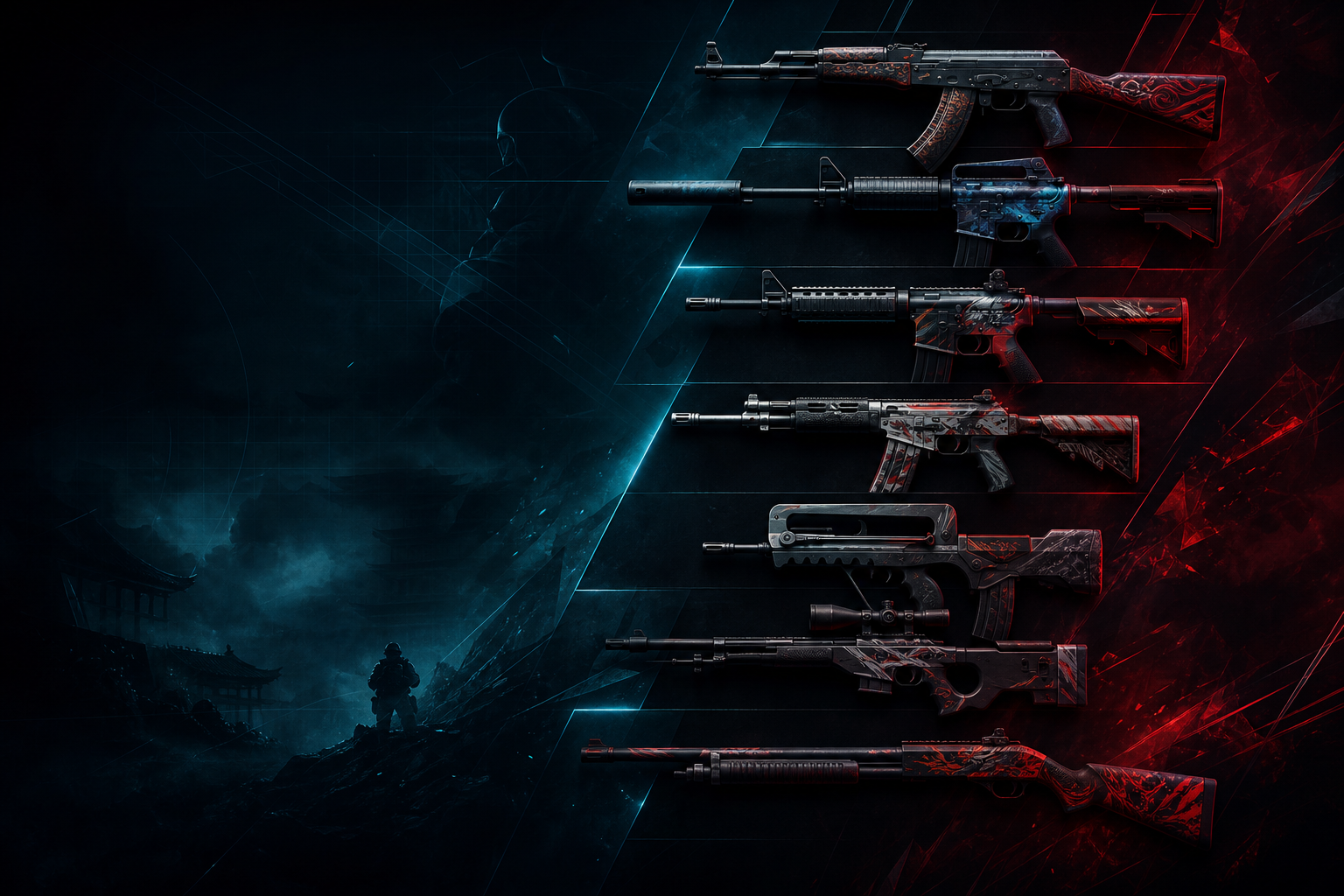
Tier List: CS2 Rifles Ranked by Real Match Value

You can win a lot of CS2 rounds with aim alone, sure, but if your rifle buy is wrong, you’re basically donating rounds and pretending it was “unlucky.” I’ve lost count of how many Premier games get thrown because a team force-buys three Galils on 2,100 and then wonders why the CTs have M4s, utility, and full armor on round 4. Rifles decide real match value in Source 2 because the subtick era didn’t suddenly make economy irrelevant — it just made bad buys feel even more punishable.

So here’s the clean version: this is a tier list for rifles based on actual match impact, not Reddit fantasy, not Deathmatch comfort, and definitely not the “I top frag with the FAMAS so it’s good” crowd. We’re ranking by price-to-value, consistency, side strength, and how often the gun shows up when the round is actually on the line.

The S tier is simple, and it’s boring for a reason

Top rifles are top rifles because they win rounds when the economy is messy, the execute is late, and nobody’s feeling calm. That’s the whole job.

AK-47

The AK is still the king. One-shot headshot on a helmeted enemy at any range is absurd value for $2,700, and that matters more in CS2 than people admit, because subtick doesn’t change the fact that a clean burst from connector or cave ends the round. On Mirage, Ancient, Inferno — wherever — T-side rifle rounds are built around the AK. If your entry dies but gets traded, the AK still did its job better than any “consistent” rifle ever could.

M4A1-S

Yeah, I’m putting the silenced M4 above the A4 for real match value. At $2,900, the A1-S gives CTs absurd control in post-plants and long-range fights, and the lower recoil means fewer stupid misses when you’re anchoring B apps on Inferno or holding Hut on Nuke. The clip size is smaller, which keeps it honest, but in actual matches that rarely matters more than the fact that you can spray one guy down and still have enough bullets to fight the second. This thing got hammered by the nerfs a while back and it’s still the cleaner buy.

If you’re thinking in pure impact, those two sit alone. Everything else is fighting for scraps below them.

A tier: the rifles that win maps when played right

This is where the guns stop being obvious and start depending on side, player style, and map callout. Good rifles here can carry a half. Bad usage makes them feel trash.

  • M4A4 — Better in spam-heavy rounds, better if you’re a mouse monster, and better when you expect multiple bodies through smokes. The 30-round mag matters more than people say on Overpass bathrooms or Banana retake fights.
  • Galil AR — Probably the best $1,800 rifle in the game. On T-side force rounds, it’s the difference between “we’re gambling” and “we actually have a mid-round.”
  • FAMAS — Ugly, but not dead. At $1,950 it’s a decent CT budget buy if your team is saving utility for the next full. Still, it feels worse than the Galil in raw fight quality, which is a problem.

The A4 vs A1-S debate is actually useful now, not just forum noise. On maps like Nuke and Ancient where CTs get weird multi-angle fights, the A4’s bigger mag can save your butt. On Mirage CT, especially when you’re juggling short, stairs, and mid, the A1-S still feels easier to keep under control. If you watched donk at the Shanghai Major, you saw how brutally fast rifle value converts when a player is just taking space and not overthinking it. That’s what the AK and A1-S reward: simple, violent efficiency.

B tier: playable, but you’re paying for the wrong thing

These rifles aren’t bad. They’re just rarely the smartest purchase when the scoreline is tight and every $300 matters.

Aug

The AUG sits in this weird spot where people either overrate it because of the scope or ignore it because they remember the old nerf era. It’s fine. That’s the issue. At $3,300 it asks for too much in a meta where most CTs need armor, nades, and a smoke or two to even survive the first contact. On Dust2 long or Overpass A-site, it can absolutely farm if you’re posted and disciplined, but it doesn’t swing a round as hard as the M4s.

SG 553

The SG still has a scope, still has lane control, and still gets picked by players who want to hold an angle like it’s 2019. The problem is the cost and the commitment. $3,000 is too much for a gun that asks you to slow the round down, and in modern CS2 that often just gives the CTs time to stack. Good gun. Bad buy most of the time.

These are the rifles you buy when the round script already works in your favor. If you’re forcing with them, you’re usually just telling the other team to farm you for cash.

C tier is where the economy starts yelling at you

This is the part where people get emotional, because everybody has a niche pickup they swear is secretly insane. I’ve been there. I’ve also watched those same players get full-stunned on Anubis and die with a half-broken buy.

  • FAMAS on full CT buys — It exists because Valve made it exist, not because it feels great.
  • Galil on low-money T rounds — Still good, but it’s a compromise, not a statement piece.
  • AUG/SG as “default” buys — These punish lazy mid-rounding harder than they reward aim.

The real problem with this tier is opportunity cost. In a Premier game, if you’re on 6,000 and buying a scoped rifle instead of AK/M4 + utility, you’ve already made the choice that gets punished in semi-pro and faceit-level matches. Pros don’t lean on these guns unless the round conditions are weird. s1mple, ZywOo, m0NESY — those guys might make any rifle look cracked, but when the money’s normal, they’re still grabbing the most reliable tool, not the fanciest one.

Bottom tier: there’s almost no excuse

Here’s the blunt part: some rifles are technically usable and still not worth a slot in serious play. If your round plan depends on them, you’re probably overcomplicating things.

  • Scout-adjacent rifle play — Not a rifle, but people love pretending it’s one. It isn’t.
  • Eco leftovers — If your “rifle” buy is whatever’s in spawn after three deaths, that’s not strategy.

CS2’s subtick movement and shooting feel smoother than old CS:GO in a lot of spots, but the rifle hierarchy didn’t get rewritten by that. You still need guns that reward first bullet accuracy, controlled spray, and cheap enough buys that the rest of your team can keep utility. The best rifle in the game is the one that fits the round economy and the map, not the one with the flashiest inspect animation.

The actual tier list, no fluff

If I had to slap the rifles into one clean list for real match value, it’d look like this:

  • S tier: AK-47, M4A1-S
  • A tier: M4A4, Galil AR, FAMAS
  • B tier: SG 553, AUG
  • C tier: niche picks, force-buy leftovers, and anything you buy just because you’re tilted

The line between winning and losing in CS2 is often just one buy-round decision. A $2,700 AK that converts map control on Mirage mid or a $2,900 A1-S that shuts down Nuke ramp is worth way more than a fancy rifle that looks good in your inventory and awful in round 21. That’s the part people forget when they chase comfort over value.

So next time your team has $4,200 and someone says, “let’s make it interesting,” ask the only question that matters: are you trying to look different, or are you trying to win the round?

The Worst Meta Habits in 15k CS Rating Games Right Now

I’ve lost count of how many 15k CS Rating games I’ve watched where the round starts clean, then somebody throws it away by dry peeking a Scout angle at 1:45 or saving a full-buy AK on 0:39 because they’re “low confidence.” That’s the 15k trap. People are good enough to know the basics, but not disciplined enough to stop doing the dumb stuff that keeps bleeding rounds.

At this rating, you’re not getting farmed by raw mechanics every round. You’re getting punished by bad habits. Source 2 and subtick didn’t fix that. If anything, the new feel made some players even lazier about timing, spacing, and teamplay — which is hilarious, because the teams winning Majors and ranking up fast are doing the exact opposite.

The biggest problem: everyone thinks they’re the carry

15k is where ego starts to rot the lobby. One guy saw donk rip heads off at the Shanghai Major and now he thinks every T side should be a solo B ramp swing. Another watched m0NESY hit a crazy AWP flick and decides he should wide peek Mirage window with no flash, every single round, like that’s a real strat and not just expensive suicide.

The meta habit here is simple: players overvalue opening duels and undervalue round structure. You can feel it on maps like Mirage, Inferno, and Ancient. CTs keep giving up mid control for free, then complain about “no rotations” when they’re 2v4 on the wrong side of the map. Ts burn 30 seconds staring at nothing, then explode into the only stacked site like they’ve got a script from 2018.

Dry peeking is still ruining games

This one never dies. In 15k, people still swing angles like the enemy is blind, broke, and asleep. They’re not. Even with subtick making inputs feel cleaner than old 64-tick nonsense, a clean counter-strafe doesn’t save you from being predictable.

Bad peeks show up everywhere:

  • Mirage mid: walking into connector with no flash, then acting shocked when an AWP takes your face off.
  • Inferno banana: solo-swinging logs against a teammate holding top banana, which is basically gifting first contact.
  • Nuke lobby: wide peeking outside while your team hasn’t even taken garage pressure.
  • Anubis B main: dry running through a smoke like you’re trying to speedrun a highlight reel.

What should happen instead? Trade for info. Use a flash. Take space with a second body. The whole point is to make the duel unfair in your favor, not to feed the other side a free CS Rating donation.

The economy mistakes are somehow worse than the aim

Here’s the part that drives me insane: players at 15k know the gun prices, but they still buy like they’re on autopilot. You’ll see a team force on round 2 after losing pistol, end up with two Deagles, three half-armors, and one random MP9, then wonder why they’re broke on round 4. It’s not mysterious. It’s just bad math.

CS2 economy still punishes sloppy decisions hard. If your team has $2,000-ish after a lost pistol and you dump everything into a fake “force,” you’re usually not getting a real buy until the round after next, and by then the CTs have a full utility stack and a 4-round lead. That’s not a comeback plan. That’s donating map control.

The worst version is the fake confidence buy: one AK, four pistols, zero nades, and everyone insisting it’s winnable because “we aim.” Sure, and s1mple can probably. You can’t. Not in a lobby where half the teams are playing retake setups like they actually watched a pro demo this year.

Utility gets thrown like it’s a cooldown, not a weapon

Utility in 15k is a mess. Molotovs get tossed at random walls. Smokes are used for vibes instead of timing. Flashbangs pop at teammates’ feet. It’s like people forgot a grenade costs real money, and each bad piece of utility can swing a round more than a flashy aim duel ever will.

On Inferno, a proper banana fight should start with contesting top banana, then maybe a second molly to keep CTs honest. On Mirage, top-mid pressure without connector or window utility is just a gift to the defense. On Ancient, a good mid take needs at least one smoke and a flash to stop those free AWP lines. That’s not theorycraft. That’s baseline play.

Pros don’t win by “just going.” ZywOo isn’t carrying because he spams push buttons and hopes for the best. He gets space because his team understands utility timing, spacing, and what the other side can actually afford to contest. Your 15k stack should stop treating utility like optional decoration.

Over-rotating is basically a team-wide panic attack

Once a team in this rating gets a little nervous, the map starts falling apart. One footstep on A? Three guys rotate. One smoke pops B? Suddenly the anchor is alone, the lurker is dead, and the bombsite has been abandoned like the match just turned into a deathmatch server.

This is especially bad on Nuke and Vertigo, where rotation timing matters a ton. If you leave ramp on a fake too early, congratulations, you’ve made the T side’s life easier. If you triple-rotate on Dust2 after one mid flash, you’ve basically told the other team to hit the open site and plant for free.

Good teams hold their nerve. They let info breathe. They understand that a footstep at 1:10 doesn’t mean the bomb is about to land on site. It might just be a lurk, a probe, or some kid trying to bait reactions. You don’t need four players sprinting through choke points every time somebody sneezes.

There’s still way too much fake confidence in clutches

Clutches at 15k are weird. Half the players are too scared to move, and the other half play like every 1v2 is a YouTube montage title. Both are bad. The real mistake is not reading the round. If the bomb is down on A and you know the last two Ts are low on nades, why are you sitting in CT spawn staring at the sky?

Clutching is mostly information and timing. If you’ve got a 1v2 and one enemy already showed on short, you need to isolate the other player, not sprint at both of them with a USP like it’s 2015. The best clutchers in the pro scene do this constantly — tiny pathing choices, tiny sound cues, tiny pauses. That’s why they make “impossible” rounds look routine.

At 15k, the bad habit is the opposite: panic-swinging, never counting util, never checking the clock. If you don’t know whether the last T can even make the bomb, you’re not playing the clutch. You’re just guessing loudly.

What actually wins these games

If you want out of the 15k swamp, stop chasing hero plays and start being annoying in the right ways.

  • Trade every duel.
  • Respect the economy.
  • Use utility to start fights, not decorate them.
  • Stop rotating off one sound cue like it’s gospel.
  • Play the clock when you have the man advantage.

Sounds basic, because it is. That’s the annoying part. Most 15k games aren’t decided by some hidden subtick trick or a mystical Premier rating conspiracy. They’re decided by the team that makes fewer stupid decisions for 24 rounds straight.

So next time your lobby starts telling itself it “just needs aim,” ask one blunt question: if the aim is so good, why are you still losing every round you give away for free?

Train Might Be Back, and CT Rotations Are the Whole Story

Train is the kind of map that makes you stop dry-swinging like an idiot and start thinking about space again. One missed smoke at Ivy, one late rotate through Connector, and suddenly the whole round feels cooked. That’s why the chatter around Train coming back in CS2 isn’t just nostalgia — it’s a reminder that CT rotations, not flashy aim clips, usually decide who actually gets to keep the bombsite.

And yeah, Source 2 and subtick matter here, but not in the “fixed everything” way people joked about at launch. They matter because Train punishes sloppy timing harder than most maps. If your rotation is even two or three seconds late, that’s not a small mistake. That’s the round.

Train doesn’t forgive lazy CT movement

Old Train was always a timing map, and that hasn’t changed. The lanes are long, the choke points are clear, and the amount of info you get is weirdly binary: either you know exactly where the hit is coming from, or you’re already behind. On T side, you can pressure outer, pop utility at Ivy, and force a CT to stare at the wrong angle while the real hit comes lower. On CT side, your job is basically to keep the map from collapsing the moment someone makes contact.

That’s why rotations are the whole story. Not just fast rotates, either. Clean ones. The kind where you know when to leave Popdog alone, when to hold a little deeper on B, and when to trust your rotator to cross without getting farmed by an AWP on Red Train. If you’ve played enough Premier games, you know the feeling: one teammate calls outer, three guys over-rotate, and B gets walked through like the door was left open.

The real map control problem

Train compresses a lot of the usual CS2 decision-making into a small number of lanes:

  • Ivy is a silent tax on CT attention.
  • Outer forces utility early, which means your nades aren’t free later.
  • Lower punishes hesitation harder than most lower bombsites in the pool.
  • Connector-style rotates are dangerous because they’re exposed and predictable.

If you’ve watched s1mple or ZywOo abuse timings on maps like this over the years, you already know the rule: the team that understands space first usually wins the gunfights second. Donk’s whole thing on aggressive map control works for the exact same reason. He doesn’t just shoot heads — he steals map options. Train rewards that mindset more than most modern maps do.

CT side isn’t about stacking, it’s about delaying

Bad Train CTs overstack because they panic. Good ones delay because they understand the T side’s clock. That difference matters a ton in CS2, where smokes and flashes are still strong enough to force real rotations, but not so oppressive that you can’t play around them if you’ve got discipline.

The goal isn’t to “hold” every site with bodies. That’s fantasy stuff. The goal is to make the T side spend 20 to 30 seconds proving their intention, then move into the right piece of the map before the final hit lands. If you’re rotating at the first sound cue, you’re probably wrong. If you’re rotating after the plant, you’re dead.

Train also exposes how bad some players are at reading utility. A connector smoke and a late outer pop don’t mean you instantly sprint B. Sometimes the right play is to keep one anchor alive, let the hit reveal itself, then collapse. That sounds basic, but in Premier you see players blow 5,000-plus CS Rating because they think every flash means a full commit.

What a strong CT rotation actually looks like

  • Hold your first contact point until utility forces you off.
  • Keep one player in a “boring” spot that buys eight extra seconds.
  • Rotate through safe lanes, not ego paths.
  • Call the hit early, even if you’re not 100% sure.
  • Save your third man for the mid-round swing, not the opening trade.

That last one matters more than people admit. A lot of teams waste their best rotator on the first 10 seconds of contact, then have nothing left when the Ts actually hit the open site. On Train, that’s basically handing away the round economy. A lost rifle in a 1v1 can snowball into a bad buy next round, and then you’re stuck with FAMASes at $2,050 and one half-decent AWP setup trying to stop a team with AK-47s and full nades. That’s not defense. That’s suffering.

Why Source 2 makes Train feel sharper, not easier

People keep acting like CS2 made every old map softer. I don’t buy it. Source 2 made the game cleaner in some ways and messier in others, but Train is the kind of map that benefits from clarity. Subtick helps with peeker’s advantage arguments, sure, but it doesn’t magically save a CT who rotates like he’s late for a train he already missed.

What Source 2 does change is the feel of information. Utility lands with enough consistency that the better team can build actual plans around it. That matters on a map where a single smoke line can decide whether outer is playable or whether you’re forced into a retake from hell. When teams are organized, the map feels sharp. When they’re not, it feels brutal. Which is exactly how a good CS map should feel, honestly.

And if Valve really wants Train to stick in the pool, the meta has to respect that. Not every map needs to be Mirage-with-different-skins. Train should keep its identity as a map where rotations are an art form and CTs win by reading, delaying, and refusing to overreact like a stack of Faceit level 7s with bad comms.

The economy decides whether your rotations even matter

Here’s the ugly part nobody likes to say out loud: great rotations don’t matter much if your economy is cooked. CT Train is one of the most punishing maps in the pool when your money’s weak, because every missed retake and every saved rifle makes the next round more awkward. One bad force, then a half-buy, then you’re trying to defend with a MP9 and a dream. That’s where rounds get lost before the first bullet is even fired.

On the flip side, when your economy is healthy, Train gives you real choices. You can double-AWP outer. You can play layered utility on B. You can afford a rifle anchor in Ivy and still keep a rotating rifle ready to swing mid-round. It’s one of the few maps where proper money management still feels like a strategic weapon instead of boring bookkeeping.

Teams at the top level know this. The squads that win Majors don’t just frag — they protect their buy patterns. That’s why you keep seeing elite teams grind the boring rounds at events like Katowice or the Major stage itself. They understand that the difference between a good CT half and a disaster is often just two saved rifles and one clean rotate.

If Train comes back for real, the meta will have to grow up

Train isn’t going to be for everyone. Good. It shouldn’t be. The current CS2 playerbase has gotten a little too comfy on maps where one early molly and a cracked entry win the round. Train pushes back against that. It asks whether your team actually knows how to rotate under pressure, whether your anchor can live for 12 seconds without begging for help, and whether your in-game leader understands that information is worth more than panic.

If the map returns in a serious way, I’d expect the best teams to treat CT rotations like a resource, not a reaction. That means tighter anchor spacing, smarter mid-round pivots, and way less of that “three-man rotate because we heard a footstep” nonsense. The teams that adapt fastest — the ones with the discipline of a MOUZ-style system or the raw mid-round authority you see from elite CIS cores — will farm everyone else for a while.

Train doesn’t care how good your aim clip looked on Dust2 last night. It cares whether you can read a round, trust your timing, and rotate like your life depends on it. Because on this map, it kind of does. So when Train comes back, are you actually ready to play CT — or are you just ready to panic?

The CS2 Anti-Eco Meta Is Broken and Players Keep Throwing It

Nothing tilts a CS2 player faster than winning pistol, losing the anti-eco, and then watching a dude with a Glock 18 and $800 in his pocket flatten your $35,000 buy because your team decided to dry peek three angles like it’s 2017. It happens constantly. It shouldn’t. And yeah, I’m saying the anti-eco meta is broken because half the player base still treats a force-buy round like it’s free money instead of the minefield it actually is.

Source 2 made the game cleaner, subtick made it feel different, and CS2’s economy is harsher than people act like it is. The anti-eco round isn’t some throwaway. It’s one of the most important rounds in the half, especially now that a single bad conversion can snowball into a 3-0 start for the wrong side and turn a 3k into a full momentum collapse.

The anti-eco round is supposed to be boring. That’s the point.

People keep trying to turn anti-ecos into highlight reels, and that’s exactly how you lose them. The whole job is simple: trade cleanly, don’t donate guns, and respect the fact that the other team is trying to farm rifles off you. A 5-man swing into Banana or Mid because “we have armor and SMGs” is how teams throw 2,000-3,500 dollars of round value in about four seconds.

The logic is dead basic:

  • They’re on pistols or a trash force.
  • You’re probably on rifles, maybe a couple SMGs if your economy’s a little gross.
  • You win by spacing, utility, and patience.

And yet people still sprint into Connector on Mirage with no flash, or they chase low HP T-side players through Arch on Inferno like the round ends if they don’t get the kill instantly. That’s not aggression. That’s just donating anti-eco upside to the other team.

Why this keeps happening

Part of it is ego. Part of it is bad habits from older CS versions where some players got away with pure aim and no structure. Part of it is that CS2’s pacing can bait people into thinking the subtick system somehow rewards faster ego peeks. It doesn’t. A Glock headshot is still a Glock headshot, and a spammed MP9 still deletes you if you walk into the wrong choke like you’re immortal.

The worst part? People think “we have better guns” means “we win.” No. You have a better loadout, not a free round. If your CT side on Nuke is holding Secret with one guy and three others are posted too far apart to trade, a pistol stack can still rip your round apart before your rifles even get to play CS.

The anti-eco meta is broken because players refuse to play the timer

Old CS players knew this instinctively. You clear close corners, you pin the pistols down, you make them show themselves, and you don’t let them get cute with stacks or double pushes. CS2 players? Too many of them want instant contact. They’d rather lose a guy to a Deagle at top Mid on Ancient than spend 15 seconds clearing space properly.

That’s where the meta feels broken. Not because the game is busted, but because the average player still plays anti-ecos like they’re chasing frag clips. You can see it in Premier all the time. A 19,000 CS Rating team gets complacent against a 13,000 stack, throws a man into a flashless duel, and suddenly the “easy round” becomes a 1v2 with the bomb down and no kit on site.

Real teams don’t do that. Watch top-level CS and you’ll see how disciplined the conversion rounds are. When donk and Spirit punish a force, it’s not just aim—it’s timing, spacing, and refusing to give pistols a fair fight. ZywOo’s teams do the same thing when they’re sharp: one piece of utility, one piece of contact, then a clean trade. m0NESY doesn’t go hunting alone because the scoreboard says he can; he knows the round value matters more than ego.

Where players keep throwing it away

  • Overpeeking after first contact.
  • Solo clearing after a plant, then getting knifed in the back of the round.
  • Using a full flash for a 1v1 that didn’t need to happen.
  • Saving SMGs in anti-eco rounds for no reason, then losing map control anyway.

That last one drives me nuts. If you’ve got an MP9 or Mac-10 and the other team’s on pistols, stop playing like you’re protecting a museum piece. Take space. Run them out of position. You paid $1,250 for that SMG; use it to make the pistol round miserable, not to stand on the bombsite and admire your crosshair placement.

CS2 economy makes bad anti-eco habits even uglier

Let’s talk numbers, because this is where people hand-wave too much. In CS2, a rifle round loss still stings hard, and the anti-eco conversion often decides whether a team can stabilize at 2-1 or gets dragged into a gross half-buy pattern. Losing one anti-eco can mean the difference between holding a proper $3,250-ish CT setup and being forced into weird half-armor nonsense on the next round.

That matters even more on maps like Inferno and Anubis, where a pistol stack can turn into a nightmare if your spacing is bad. On Inferno, if you’re re-clearing Second Mid and Banana at the same time without enough bodies to trade, you’re asking a USP or P250 player to earn a rifle. On Anubis, if you don’t respect the underpass/connector split, a cheap force can collapse your whole setup before you’ve even taken map control.

And don’t even get me started on Mirage. The amount of teams that lose anti-ecos because they walk out Pallet, A Ramp, or Top Mid with zero patience is ridiculous. One flash, one molotov, one player holding the swing, and the round is over. Instead, people dry-run the choke, get farmed by a Deagle, and then act surprised when the opposing team buys up the next round off your dead AKs.

The actual fix isn’t hard. Players just don’t want it

Here’s the ugly truth: the anti-eco meta isn’t broken for top teams. It’s broken for everyone who refuses to respect fundamentals. If your team has decent comms, proper spacing, and even a basic idea of how to clear a site, anti-ecos are supposed to be low-drama rounds. They’re not flashy. They’re work.

Try this instead:

  • Run a proper anti-flash setup before taking space.
  • Keep at least one rifle or SMG dedicated to trading, not solo peeking for ego.
  • Clear close angles first. Always.
  • Stop re-peeking the same lane after you’ve already tagged a pistol player.
  • If you get a 5v4, slow down and force them to move.

That last one is the whole thing. Once you get the first kill, the anti-eco becomes about discipline. Don’t give them a swing back. Don’t let the P250 lurker reset the round. Make them either save or take a horrible fight into your crossfires. That’s how real teams farm economy without tossing a rifle to some guy on 1 HP who had no business winning that duel.

Premier players feel this the hardest

Premier has made this whole issue more obvious because the rating grind rewards consistency over hero plays. If you’re stuck in the 14,000 to 18,000 range, anti-eco throws are brutal. One bad round can flip a half. One sloppy swing can turn a likely 8-4 into a messy 6-6 because everyone decided to play deathmatch instead of Counter-Strike.

The funny part is that high-rated teams still do it, just less often. That’s the gap between good CS and bad CS: good teams treat anti-ecos like a formality, while bad teams treat them like a chance to farm clips. One of those wins maps. The other one gives some P250 gremlin a highlight reel and your IGL a headache.

Stop pretending pistol rounds are harmless

This is the piece people keep missing. Anti-eco isn’t a warm-up round after the pistol. It’s part of the same economy chain, and CS2’s current pace makes every conversion matter even more. Win pistol, win anti-eco, and suddenly you’re controlling the half. Lose either one, and you’re giving the other side room to breathe, which is exactly how underdogs steal maps in Majors and why upsets keep happening on stage.

So no, the fix isn’t “buy more.” It’s not “aim harder.” It’s not “just rush them.” It’s respecting the round for what it is: a trap with pistols, low armor, and players who know you’re cocky before you even round the corner.

Are you actually playing the anti-eco, or are you just walking into it and hoping your rifle is enough?

AK-47 vs M4A1-S in 2026: Which Gun Wins More Gunfights

You can feel the argument before the round even starts. T-side has a rifle buy, CTs are sitting on a clean 3k or a forced M4A1-S after a rough half, and somebody in voice is already saying the same old thing: “AK just kills faster.” Yeah. Sometimes it does. But in CS2, with Source 2 subtick, the real answer is messier than that.

The AK-47 and M4A1-S still define half the gunfights in 2026. One costs $2,700, the other $3,000, and that $300 gap keeps mattering in force buys, anti-ecos, and those ugly 3-vs-2 retakes where every bullet is doing overtime. The AK has the myth, the M4A1-S has the control. Which one actually wins more fights? Depends where the fight happens, who’s peeking, and whether your team understands economy instead of just buying whatever feels good.

The AK still owns the first bullet fantasy

The AK-47’s biggest selling point has never changed: one-tap headshots against armored opponents. That’s why every T-side rifler still treats it like the king of momentum. You clear mid on Mirage, swing connector from ticket timing, or take banana space on Inferno, and the AK can erase a CT before they even get to settle their crosshair. It’s the rifle that rewards clean crosshair placement instead of spray prayers.

That matters more in CS2 than people want to admit. Subtick made peeking feel sharper, but it also made bad spacing and lazy shoulder-peeks get punished faster. If you’re late to the head level, the AK doesn’t forgive you. The first burst can end the round right there.

And no, the “AK is only better on paper” crowd is coping. In real matches, especially at Premier rating 18k and up, you still see T sides built around AK pressure because the rifle lets average players punch above their weight. A half-decent rifler with an AK can take a map apart on Ancient cave fights or Dust2 long peeks without needing some galaxy-brain setup.

The M4A1-S wins the fights nobody clips

The M4A1-S doesn’t get the same highlight-reel treatment, but it wins a disgusting amount of boring, important fights. That’s not a small thing. Silent shots, tighter spray, lower recoil, and easier long-range control mean the M4A1-S is the gun you want when the round turns into a mess at 24 bullets and a prayer.

On CT side, especially on maps like Nuke, Anubis, and Overpass, that first clean kill matters more than raw damage potential. Holding heaven, monster, or B main isn’t about looking cool. It’s about not getting traded instantly. The M4A1-S lets you hold narrower angles and reset faster after the first shot. When you’re fighting T-side utility and rushed spacing, that quieter spray buys you time your teammates usually waste.

The irony is that the M4A1-S becomes even better when players are bad at timing. In lower Premier lobbies, people wide-swing into pre-aimed CTs all day, and the M4A1-S chews through those fights because the defender gets to keep the crosshair steadier. On a strict mechanical level, it’s less flashy. In practice, it’s a rat trap.

Gunfight by gunfight, here’s where each rifle actually shines

If you strip away the ego and just look at the fights, the split gets pretty obvious.

  • Close range: AK if you’re the peeker, M4A1-S if you’re anchoring and holding.
  • Medium range: AK still hits harder, but the M4A1-S spray is easier to tame when the fight turns into a trade battle.
  • Long range: M4A1-S feels calmer on CT, though AK headshots end things faster if you’re crisp.
  • Multi-kill scenarios: AK usually has the ceiling, but M4A1-S often gets the first two kills cleaner because of recoil control and silence.

That last part is the sneaky one. People obsess over kill potential, but gunfights in CS2 are usually chain reactions. You kill one, the second guy swings off the trade, then a smoke blooms, then the round becomes a coin flip. The M4A1-S is great at making those first chain links harder to break. The AK is better when you’re the one forcing the chain to happen.

If you watch someone like ZywOo on CT or s1mple in his best form on the rifle, the pattern is obvious: they’re not just shooting for damage, they’re controlling the round state. On T side, donk and m0NESY have both shown how nasty the AK can be when you combine speed, confidence, and perfect timing. The rifle is never just a rifle in pro play. It’s a pace setter.

Economy still decides the argument more than aim does

This is where a lot of players lose the thread. The AK vs M4A1-S debate isn’t just “which one kills faster.” It’s also “which one gets bought more often, and in what round states.” The AK sits at $2,700. The M4A1-S costs $3,000. That $300 difference is the kind of thing that decides whether your CT side has a full nadeset or one sad smoke and a flash you’re saving for your next life.

On T side, the AK is almost always the default because if you’re spending less, you can still keep utility in the bag. That matters on execute-heavy maps like Mirage and Inferno, where a single extra flash can turn a dry mid take into a free connector collapse. CT side, the M4A1-S often makes sense because the role itself is different. Anchors don’t always need the bigger magazine or the louder spray. They need the first kill and the retreat.

There are also rounds where the M4A1-S is just flat-out the smarter buy:

  • you’re on a 2nd-round CT buy and need enough money for kit + utility next round;
  • you’re anchoring solo B and expect multiple close-range fights;
  • you know the T side is leaning slow and forcing late-round retakes;
  • you’re playing a map with lots of long sightlines and connector-style fights.

Meanwhile, the AK is the better bargain when you’re on T side and trying to pressure multiple points at once. One bullet to the dome still solves problems quicker than any CT rifle can dream of. That’s why even when the M4A1-S feels better in hand, the AK stays the more “winning” rifle across the full economy picture.

CS2 subtick changed the feel, not the hierarchy

People love blaming subtick for everything, but the AK vs M4A1-S balance hasn’t flipped because of it. What subtick did change is how often the first accurate shot lands in that tiny peek window. The gun that rewards cleaner crosshair placement and quicker punishment still matters most, and that’s the AK in open duels. The gun that controls recoil and stabilizes messy fights still matters most, and that’s the M4A1-S on defense.

What changed in Source 2 is the way fights feel. Peeks are sharper, trading is cleaner, and bad movement gets exposed instantly. So the AK’s raw kill power feels even nastier when a T-side rifler swings with confidence. At the same time, the M4A1-S feels less punishing when you’re defending because you can keep your spray tight without fighting the weapon nearly as much as you would with an M4A4.

That’s why the better question isn’t “which gun is stronger?” It’s “which gun fits the round state better?” CS2 keeps rewarding people who read timing. The weapon choice is just part of that read.

So which one wins more gunfights in 2026?

If you’re asking for the blunt answer: the AK-47 wins more gunfights overall, because T-side peeks are inherently built around taking initiative, and initiative is still king in Counter-Strike. The AK gives you the fastest punishment for a clean headshot, the best value on a $2,700 buy, and the highest ceiling in aggressive duels. That’s why it keeps showing up in the biggest rounds at Majors and the highest levels of Premier.

But if you’re asking which rifle wins more fights per dollar on CT side, the M4A1-S makes a disgusting case for itself. It’s quieter, easier to control, and better at surviving the weird, scrappy fights that define defense in CS2. If you anchor properly and don’t ego-swing like you’re trying out for a frag movie, it prints value.

My take? The AK is still the better rifle, but the M4A1-S is the better hold-weapon. One wins the opening duel. The other wins the round after the utility comes in and everybody’s panicking. If your game plan is dry peeks and raw aim, AK every time. If you’re actually trying to win CT halves instead of padding clips, the M4A1-S is still filthy.

So next time someone in your lobby says the AK is the only real rifle, ask them one thing: are they winning the first fight, or just dying loud?