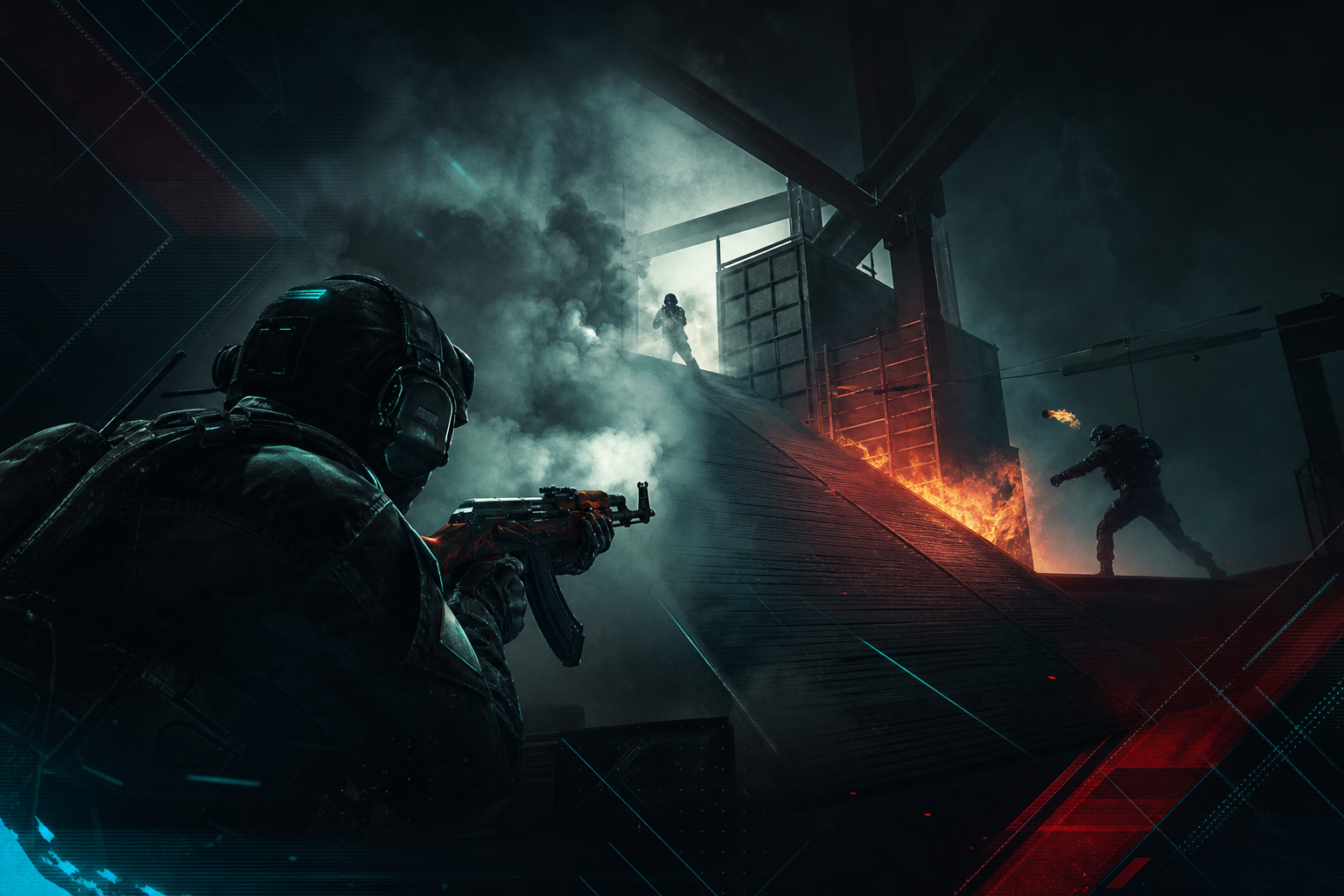
Why Vertigo Ramp Is Still the Most Misplayed Area in Pro Play

Vertigo Ramp has been getting people killed for years, and somehow pro teams still walk into it like it’s a 2014 pug. The funny part? On Source 2 with subtick, better hitreg, and cleaner utility timing, you’d think teams would finally stop treating the ramp fight like a coin flip. They haven’t. They still overpeek, overrotate, and give up the one area on the map that can decide the whole round before the 1:25 mark.

If you’ve watched enough CS2, you’ve seen it: one team loses ramp control, then panic-rotates a second player down, burns a smoke, and suddenly A site is a 3v4 while the T side hasn’t even committed. That’s the Vertigo special. It looks simple from the booth. In reality, it’s a mess of timing gaps, awkward spacing, and economy pressure that turns every bad decision into a round loss.

Ramp isn’t just space. It’s the round.

People talk about Vertigo like it’s an A-site map, but ramp is the map. Whoever owns that staircase owns the pace, the rotations, and the fake pressure that makes defenders miserable. Lose ramp early, and now your A anchor is staring at heaven and stairs with no clue whether the hit is real. Hold ramp cleanly, and the T side gets to ask all the questions.

The core problem is that teams still treat ramp as a pure aim duel instead of a layered control fight. That’s lazy. On a map where smokes, mollies, and flashes arrive in tiny windows — and where subtick makes the first contact feel instant — you can’t just dry swing through a lineup and hope for a donk-style multi-kill. Even donk, who makes stupid fights look legal, usually wins with timing, spacing, and pressure, not because the other side forgot how to crosshair.

The first mistake: defending too far forward

Half the pro teams on Vertigo want to fight ramp at the top of the staircase, usually with one player too close to the edge and another already leaning toward a rotate. That setup gets punished constantly. One flash over the edge, one smoke on the right angle, and suddenly the defender is forced into a 1v2 where every line is sliced up.

It’s even worse when a team stacks utility too early. I’m talking about the classic waste: a CT throws the first molly at 1:38, a flash goes over at 1:36, and by 1:30 the ramp player has nothing left but hope. On 64-tick matchmaking that can already feel awkward. In pro play, where utility is tighter and every second matters, it’s just bad math.

Why the best teams still mess it up

You’d expect the elite to have this solved, especially after all the time teams have spent labbing Vertigo for Majors and tier-one events. But even at the top, you see weird stuff. One round a team like FaZe will overrespect the ramp lurk and give up map control for free. Next round, they overcorrect and push too hard, getting picked apart by the kind of patient setup Vitality or G2 loves to use when they know the other side is tilted.

The issue isn’t just mechanics. It’s how teams read the round economy. A side with $1,950 per player after a forced buy can still hit ramp with enough pieces to make CTs uncomfortable. A lot of pro teams react like it’s a full invest when it’s really a mixed buy with a Galil, a MAC-10, maybe one smoke less than ideal. That’s exactly when ramp gets thrown away: the defense sees “weak buy,” swings early, and gets punished by simple spacing.

And yeah, the same mistake shows up on the biggest stages. You watch a Major, see a clean anti-eco structure, then the next round the CTs give up ramp because they’re scared of a contact pop. That hesitation is basically a free invitation. Top teams love exploiting fear more than raw setups.

What actually works at ramp

There’s a reason the better Vertigo teams don’t try to “solve” ramp with one magic smoke. They layer it. They delay it. They make the T side spend utility just to start the round, then they punish the second wave. That’s the difference between decent Vertigo and the stuff that wins maps.

Good ramp defense usually has three pieces:

  • One player holding close pressure, but not so far up that he dies for free.
  • A second defender ready to trade, not rotate.
  • One piece of delayed utility saved for the actual contact, not the sound cue three seconds earlier.

That sounds boring, but boring wins. The top teams know it. ZywOo’s teams, especially when they’re reading the pace correctly, are brutal at this kind of discipline. They don’t need to make ramp flashy. They just need to make it expensive. A forced T side that burns a smoke, a flash, and a molly before crossing into the fight is already half dead economically.

Here’s the nasty part: once ramp control is established, the A-site retake math gets ugly fast. If the CT side loses ramp and still has to contest stairs, heaven, and generator while the T side has a live lurk at sandbags or the edge of the scaffolding, the retake becomes a guessing game. That’s not tactical depth. That’s chaos with better shoes.

Pros keep misreading the timing windows

Vertigo Ramp is one of those spots where timing feels simple until you actually track it round by round. The first contact often lands around 1:30 to 1:20, but the real punish comes 5 to 8 seconds later, when defenders think the fight’s over and start moving. That’s when the lurk catches the rotation, or the second wave hits with better spacing.

That timing gap is why m0NESY-style aggression works so well when it’s used smartly. Not because he runs at ramp every round like a maniac, but because he understands the moment defenders relax. One clean pick, one reposition, and the whole shape of the round changes. Most teams don’t track that well enough. They just watch the first kill and assume the round is stable. It isn’t.

The economy angle nobody respects enough

Ramp also gets misplayed because teams act like every round is equal. It’s not. A CT side up 8-6 with a full buy can afford a slow ramp hold and two pieces of late utility. A CT side on a 2-1-2 after losing the bonus? Different story. The difference between a $2,900 CT buy and a shaky $1,850 save-round defense is massive, and ramp is usually where that gap gets exposed first.

That’s why some of the dumbest-looking ramp holds are actually economic throws. A defender dies early trying to “make a play,” and suddenly the team has to spend an extra $800 on a recovery buy the next round. Over a half, that snowballs into worse rifles, weaker kits, and fewer double-nade setups. One bad ramp fight can wreck three rounds of economy planning.

And because Vertigo is so punishing on the T side once they’ve banked momentum, the map flips fast. If you hand over ramp twice in a row, the attackers stop respecting your positions. They start dry peeking, taking space off sound, and forcing you into desperate holds. That’s when a map turns into a slog.

So why does it keep happening?

Because Vertigo rewards teams for doing the obvious thing until the obvious thing stops working, and a lot of pro teams are weirdly slow at spotting that transition. One round they need passive ramp control. Next round they need a hard contest. Then they need to fake the contest and fall back. That sounds basic, but getting those decisions right under pressure is where teams separate.

There’s also the ego factor. Ramp feels like a spot you should be able to win with aim alone, so players keep trying to brute-force it. Bad idea. On CS2, with subtick making every micro-mistake show up instantly, you don’t get away with sloppy spacing or lazy crossfires. You get deleted, then the round gets written off in the demo like it was inevitable.

Vertigo Ramp stays the most misplayed area in pro play because everyone thinks they understand it. They don’t. They understand the first kill, maybe. Not the second timing, not the utility layering, not the way one bad rotate turns into a full-site collapse. And until teams stop treating ramp like a duel instead of a control point, they’ll keep donating rounds there like it’s charity.

So what’s it going to be: are teams finally going to respect ramp, or are we just waiting for the next Major to watch another “tier-one” squad get farmed on the staircase?
4 Ways Pros Clear Overpass Bathrooms Without Wasting Utility

Bathrooms on Overpass are one of those spots that look free until you get deleted by a guy tucked behind the sink with a flash still coming out of his hand. You burn a molly, toss a flash, maybe even dump a second piece of utility, and somehow the CTs still keep the space. That’s the problem: most teams waste nades because they clear Bathrooms like it’s a generic “smoke and swing” room, when the fight is actually a chain of tiny angles, timings, and sound cues.

If you want to play Overpass properly in CS2, Bathrooms isn’t about brute force. It’s about making the CT give up info for free, then taking the room with the least possible utility tax. On Source 2 with subtick, you can’t rely on sloppy old-school timing as much as you could in CS:GO. The peek is cleaner, the shoulder bait is meaner, and if you’re late by half a beat, a player like m0NESY will punish you before your flash even pops.

Why Bathrooms is such a pain

Bathrooms sits in that ugly middle ground between map control and a full site hit. On Overpass, it’s close enough to A that CTs can play aggressive and still fall back, but far enough from Terrorist spawn that your entry stack is usually half a second behind if your timings are lazy. That’s why teams from the Pro League and Major qualifiers keep treating it like a mini-map inside the map.

The real issue is that there are three common CT looks, and all of them can eat your utility if you’re careless:

  • the close-left jiggle from the bathroom entrance,
  • the deep line from the stall side or graffiti-adjacent angle,
  • the late peek from Party or Fountain support.

Waste two flashes on empty space and you’ve basically paid 800 dollars to hear “they’re not here” in voice chat.

1. Clear the first corner with a contact jump, not a panic flash

The cleanest way to take Bathrooms is often just two players moving up on contact, with one player shoulder-peeking the first threat and the second ready to trade. No hero utility. No “full send” stuff. Just pressure. If the CT in close-left is holding for a dry swing, a contact jump or a tight walk-up often forces the shot early, and once they fire, they’re usually dead if your trade spacing is right.

This works because CTs love overcommitting to the first duel in Bathrooms. They know T-side players panic and throw utility early, so they sit there waiting for the line of smoke or the flash pop. Don’t give them that. If you’re taking a round with an AK and a Deagle in the mix, saving a flash here means you still have one for the A-short conversion later.

One clean contact play can replace 2 flashes and a smoke if your spacing is tight. That’s massive in a round where the T side might be working with $3,000 to $3,500 each after a couple of rifle losses.

2. Use the molly only after you’ve made them move

A lot of teams throw the bathroom molly first and call it “protocol.” Honestly, that’s lazy. A molly only matters if it denies a real position, and CTs know how to read it. If they’re already in the back of Bathrooms or ready to swing from a deeper off-angle, a first-piece molly just tells them you’re coming and gives them a clean retreat to the next angle.

The better play is to make noise first. Take space. Show presence with a jiggle, a footstep, or a flash bait. Then use the molly to pin them when they’ve already decided where to fall back. That’s when a 6.5-second burn actually does work, because it traps the CT between staying and dying or moving and losing the duel timing.

What this looks like in a real round

Say you’re T side with an entry, a second man, and a lurk holding connector pressure. The entry walks up toilets side, the second player holds the trade, and the lurk keeps the CTs worried about monster timing or connector aggression. Once the CT in Bathrooms starts backing off, that’s your cue. Then you molly the deep corner and swing through the space they just abandoned.

That’s the trick. You’re not clearing a room. You’re stealing a decision.

3. Flash for the trade, not for the highlight clip

Every bad Overpass team has at least one guy who throws a god flash that nobody can use because he’s already turned his own team’s eyes into white noise. Good utility on Bathrooms is boring. It pops where your teammate expects it, not where it looks sick on a fragmovie.

Use a flash that lands around the top of the bathroom entrance or over the roof line so the CT gets the white screen exactly when your first man is about to swing. If the flash goes off too early, the CT unturns. Too late, and the site defender gets a free spray transfer. In CS2, where subtick makes movement and peeks feel more immediate, that timing window is even nastier than it used to be.

  • One flash for the first contact.
  • One second flash for the swing.
  • No third flash unless the CT is still stubbornly alive.

That’s usually enough. Two flashes and a molly is the whole kit if your team actually understands spacing. If you need four pieces just to enter Bathrooms, the issue isn’t utility efficiency — it’s your approach.

4. Dry-clear the ugly angles before you spend a smoke

Bathrooms has a habit of baiting players into over-smoking. You’ll see teams drop a smoke at the entrance, then wonder why a CT is still alive behind the stall side or playing a weird depth angle near the edge of the wall. The smoke doesn’t clear the room. It just cuts your vision and makes the retake look harder than it is.

Dry-clearing the ugly angles first is way smarter. Check the close left. Clear the stall-side depth. Make sure nobody is tucked in that stupid little pocket where half the server forgets to check because they’re already thinking about A site. Once those common spots are dead or pressured, the smoke actually becomes useful — either to isolate a rotator or to block a CT’s escape route toward Fountain.

This is the same kind of discipline you see from elite teams in big stage games. Watch how squads around a Major setup don’t just “take space”; they take information, then spend utility to lock the map down. That’s the difference between a team that can win a best-of-three and a stack of Faceit demons.

When to stop clearing and just hit the site

There’s a point where Bathrooms goes from “take control” to “you’re overfarming.” And Overpass punishes that hard. If you’ve already forced the CT back, heard the rotate, and got one flash and one molly still in hand, stop playing scared. Hit A. Split short. Crawl toilets. Whatever the round needs.

Players like ZywOo and donk don’t win fights by cleaning every corner like it’s a deathmatch warmup. They win because the team makes the next decision fast. One player pins Bathrooms, one player pressures short, and the CT has to guess whether the hit is coming now or five seconds from now. That uncertainty is the point. Not the extra grenade you were saving for some imaginary perfect exec.

Overpass Bathrooms should cost you a little, not everything. If you’re throwing three nades just to get in, your team is already behind in economy terms. In a round where a saved rifle can swing the next buy by $2,700, waste adds up fast.

The real question isn’t whether you can clear Bathrooms. It’s whether you can make the CTs spend first — and if you can’t do that on Overpass, what exactly are you saving all that utility for?

Mirage Connector Fights: The Small Angles Pros Abuse Every Time

The fastest way to lose Mirage connector isn’t getting out-aimed. It’s showing too much shoulder, wide-swinging like you’re hosting a deathmatch lobby, and giving the CTs a free pre-aim. Pros don’t play connector like some heroic hallway duel — they play it like a tiny geometry problem, and they keep solving it with the same ugly little angles every single half.

That’s why connector fights are so annoying to face. One round you think you’ve cleared it, next round a rifler is tucked under the catwalk lip, a second player is jiggle-peeking from triple, and suddenly your whole A split dies because you looked at the wrong 20 pixels of the map. Mirage is built for this kind of nonsense, and good teams abuse it constantly.

Why connector is the weirdest fight on Mirage

Connector looks simple on the minimap. It’s just the link between mid, jungle, and A, right? Yeah, and Dust2 is just a desert with doors. Connector matters because it lets CTs split information and force T-side mid control into a miserable coin flip. If you lose connector early, your A hit gets pinched, your mid lurk gets cut off, and your smokes start feeling one step behind the round.

The real trick is that connector has multiple micro-angles layered on top of each other. You’re not clearing “connector.” You’re clearing the left edge of the stairs, the bench side of the opener, the underpass exit timing, the jungle peek, and the possibility that somebody’s holding a stupid off-angle with a flash ready behind him. On CS2’s subtick system, the difference between a clean swing and a dead body can be a single bad rhythm in your movement. You think you’re first. The game says no.

The small angles pros keep farming

Pros don’t need miracle aim here. They need patience, spacing, and enough disrespect to take fights one pixel at a time. Watch how teams like FaZe or Vitality approach connector control on Mirage: nobody is sprinting in blind unless they’ve already forced rotations or burned utility. The angle abuse is deliberate.

  • Short edge hold. CTs hug the connector wall and expose only a sliver to mid.
  • Stairs crouch. Not glamorous, but it catches the over-clear every time.
  • Jungle crossfire. One player shows, the other deletes the trade.
  • Under-connector punish. If T-side gets greedy, this one ends the round fast.
  • Flash-and-repeek. The classic. Still disgusting. Still works.

The nasty part is how often these fights happen with rifles that cost $3,100 or less. A CT with a $2,700 FAMAS or a $2,050 MP9 can absolutely ruin a T-side AK if the angle is tight enough and the utility is timed right. That’s not theory; that’s eco math. One connector kill can swing a round where the Terrorists were already working with $2,400 buys and praying for a clean plant.

How pros actually take the space

Most players try to “clear” connector by leaning into it with a full strafe and a prayer. Pros treat it like a sequence. First, they steal the right info. Then they force the defender to move. Then they take the angle that was empty three seconds ago and shoot the guy who thought he was clever.

Look at how donk plays pressure on maps like Mirage and Ancient — the pace isn’t random, it’s violent timing. He’ll use that half-step to bait a jiggle, then burst with a perfect counter-strafe the instant the CT repositions. m0NESY does the same thing from a different angle, and the scariest part is how little room he needs to get a shot off. Connector rewards players who understand timing windows more than raw rushing. If you’re off by even 0.2 seconds, the defender gets to hold the angle for free.

That’s where subtick gets interesting. People love to argue about whether it feels “off” or “better,” but in connector the practical reality is simple: your movement timing matters more than ever. If your shoulder peek is sloppy, the defender sees you. If your counter-strafe is late, your AK spray starts moving before the crosshair does. Mirage does not forgive that stuff.

Utility that makes the angle abuse disgusting

Connector fights get nasty when utility isn’t just thrown, but layered properly. A single smoke can block vision, sure. Good teams want more than that — they want to erase the defender’s comfort, then force a bad re-peek through a bad gap. This is the kind of stuff you see at Majors when teams actually have structure and nobody’s freelancing like it’s Premier 4k rating.

On Mirage, the useful pieces are obvious, but the order matters more than the lineup clipboard nonsense people obsess over:

  • Mid smoke to cut off the first contact.
  • Jungle smoke if you’re splitting A.
  • Window pressure so connector can’t sit still.
  • Pop flash from top mid or cat for the actual swing.

A good connector take often starts with a 2-1-2 split in player positions, then compresses into a quick burst once the CTs reveal their setup. If the CT side is down to one rifle, one SMG, and a desperate half-buy, they usually can’t defend both jungle and connector cleanly. That’s when the angle abuse goes from “smart” to “mean.”

Why bad Mirage teams keep dying there

The worst part is that people know connector is dangerous and still walk into it like it’s a ladder server. They spam one smoke, dry peek the edge, and then blame “peekers’ advantage” after getting one-tapped. Nah. You lost because you gave a defender the exact fight he wanted: stationary crosshair, clean timing, and no pressure anywhere else.

Bad teams also overvalue A site presence and undervalue connector denial. You see this in Premier all the time — a stack of players hovering around palace and ramp while mid stays soft, and then the whole round collapses because a CT lurk from connector splits the retake angle. Mirage punishes passive teams hard. If you don’t make connector expensive, someone like ZywOo-level discipline from a rifler or a sniper will just keep farming your space until the scoreboard gets embarrassing.

And no, this isn’t about “being more aggressive.” Aggression without shape is just noise. The best connector pressure has a rhythm:

  • force the first shoulder
  • take away the re-peek
  • punish the rotation

That sequence is why pro Mirage looks so clean. The camera pans, the smoke blooms, one player jiggles, another swings, and suddenly the CTs are dead in a corridor that looked tiny on the map and somehow even tinier in the server.

What you should copy the next time you queue Mirage

If you’re T-side, stop treating connector like a solo highlight spot. Use it to make the CT side choose between mid and A. If you’re CT-side, stop dry-holding the same obvious line every round. Shift 20 centimeters, change the timing, and make the Ts clear a second angle they didn’t want to check.

That tiny adjustment is the whole game here. Mirage connector isn’t won by the guy with the best crosshair placement alone — it’s won by the player who understands which pixel they can safely show and when to show it. Pros abuse those small angles every match because they know the map is built on them. You should be, too.

So next time you’re on Mirage and someone says “just hold connector,” ask yourself: which angle, exactly? Because that’s the part everybody dies to.