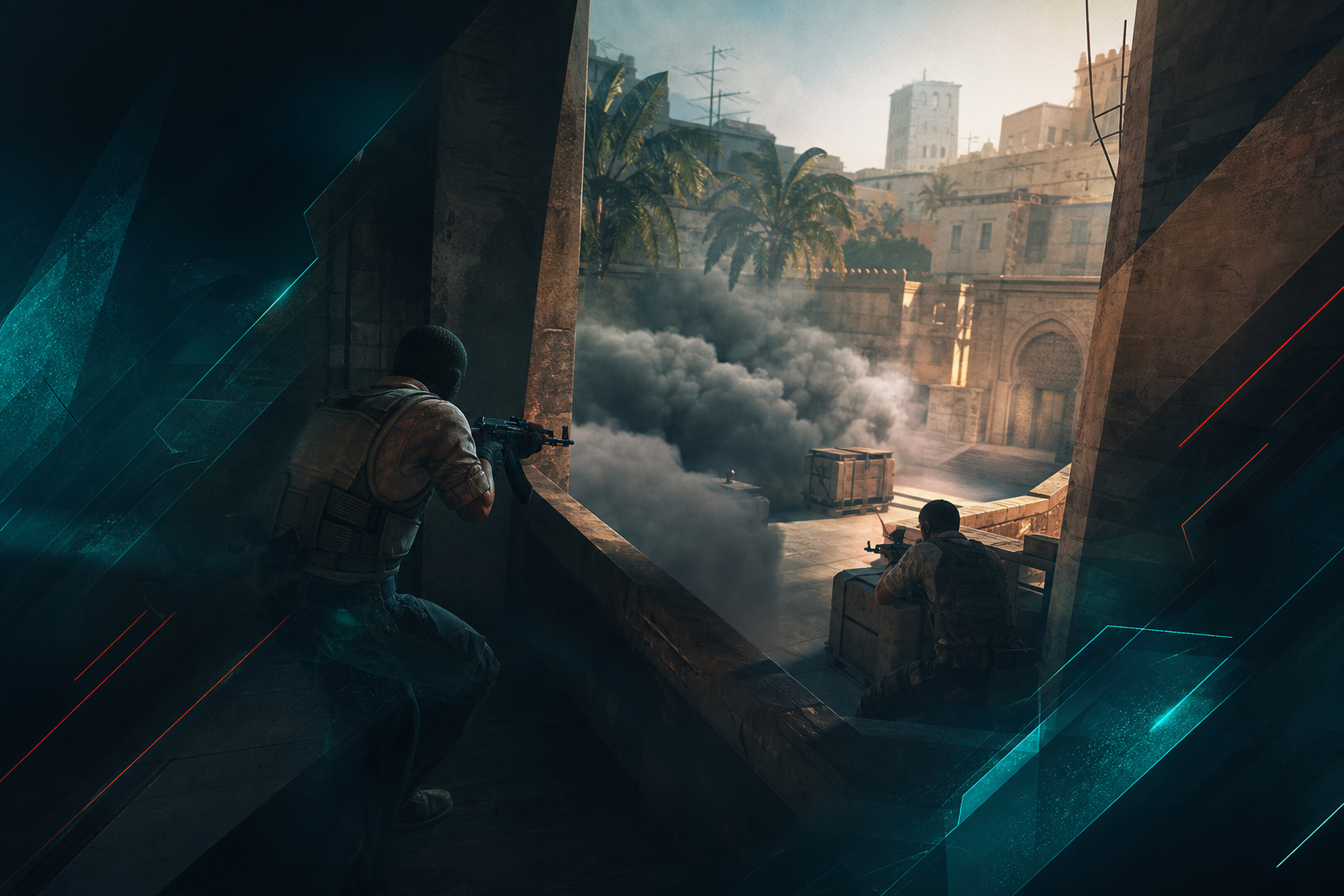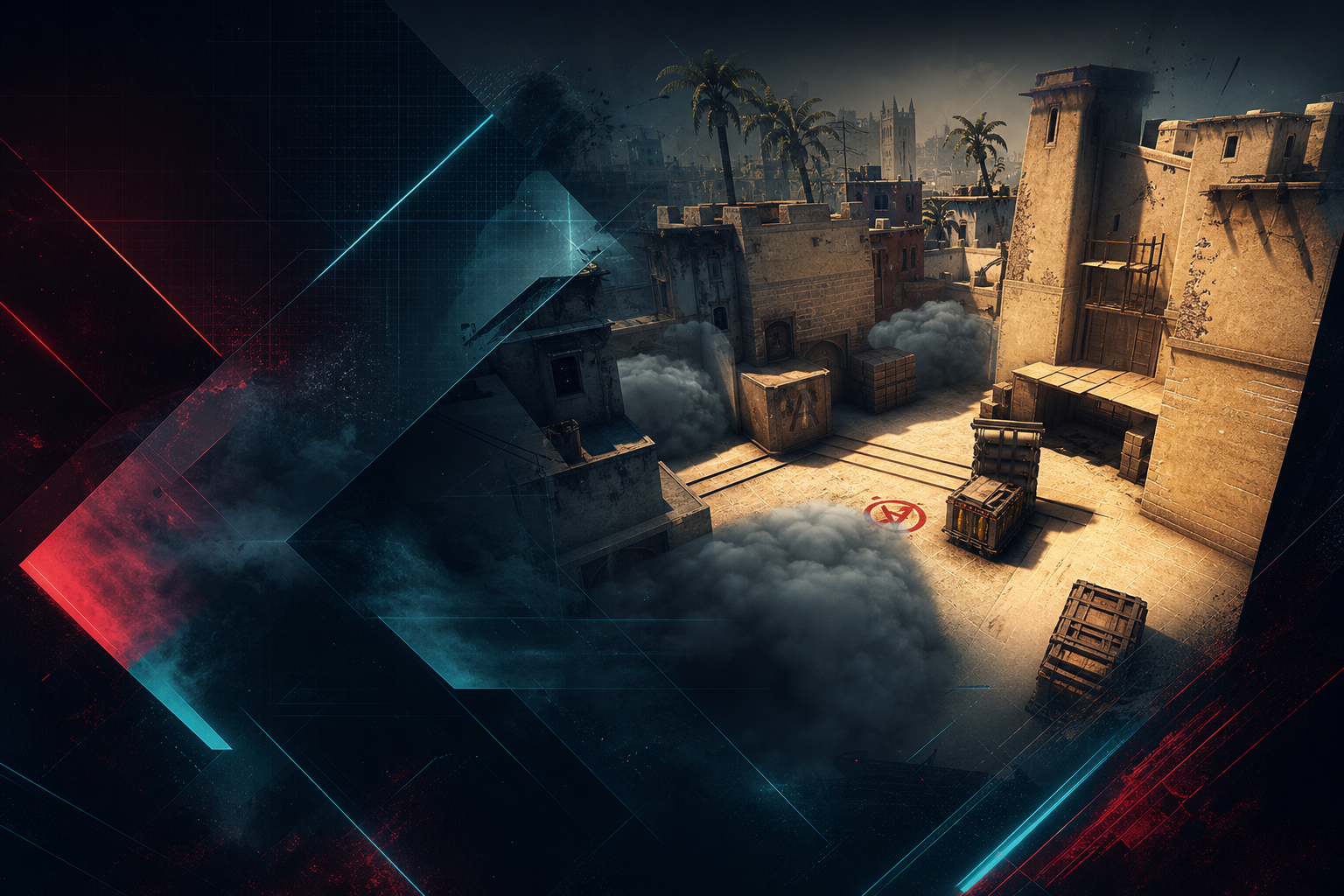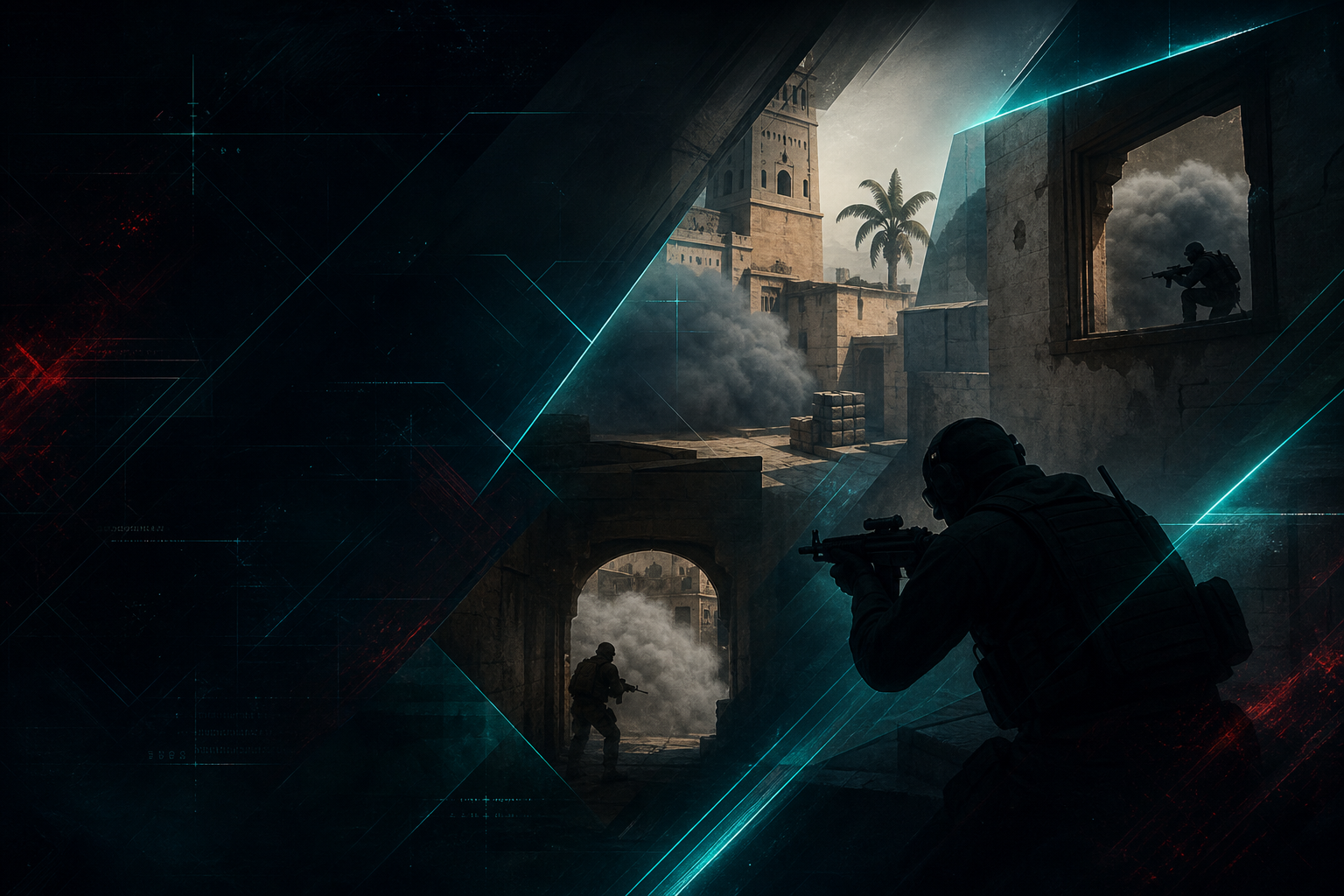
Mirage Connector Fights: The Small Angles Pros Abuse Every Time

The fastest way to lose Mirage connector isn’t getting out-aimed. It’s showing too much shoulder, wide-swinging like you’re hosting a deathmatch lobby, and giving the CTs a free pre-aim. Pros don’t play connector like some heroic hallway duel — they play it like a tiny geometry problem, and they keep solving it with the same ugly little angles every single half.

That’s why connector fights are so annoying to face. One round you think you’ve cleared it, next round a rifler is tucked under the catwalk lip, a second player is jiggle-peeking from triple, and suddenly your whole A split dies because you looked at the wrong 20 pixels of the map. Mirage is built for this kind of nonsense, and good teams abuse it constantly.

Why connector is the weirdest fight on Mirage

Connector looks simple on the minimap. It’s just the link between mid, jungle, and A, right? Yeah, and Dust2 is just a desert with doors. Connector matters because it lets CTs split information and force T-side mid control into a miserable coin flip. If you lose connector early, your A hit gets pinched, your mid lurk gets cut off, and your smokes start feeling one step behind the round.

The real trick is that connector has multiple micro-angles layered on top of each other. You’re not clearing “connector.” You’re clearing the left edge of the stairs, the bench side of the opener, the underpass exit timing, the jungle peek, and the possibility that somebody’s holding a stupid off-angle with a flash ready behind him. On CS2’s subtick system, the difference between a clean swing and a dead body can be a single bad rhythm in your movement. You think you’re first. The game says no.

The small angles pros keep farming

Pros don’t need miracle aim here. They need patience, spacing, and enough disrespect to take fights one pixel at a time. Watch how teams like FaZe or Vitality approach connector control on Mirage: nobody is sprinting in blind unless they’ve already forced rotations or burned utility. The angle abuse is deliberate.

  • Short edge hold. CTs hug the connector wall and expose only a sliver to mid.
  • Stairs crouch. Not glamorous, but it catches the over-clear every time.
  • Jungle crossfire. One player shows, the other deletes the trade.
  • Under-connector punish. If T-side gets greedy, this one ends the round fast.
  • Flash-and-repeek. The classic. Still disgusting. Still works.

The nasty part is how often these fights happen with rifles that cost $3,100 or less. A CT with a $2,700 FAMAS or a $2,050 MP9 can absolutely ruin a T-side AK if the angle is tight enough and the utility is timed right. That’s not theory; that’s eco math. One connector kill can swing a round where the Terrorists were already working with $2,400 buys and praying for a clean plant.

How pros actually take the space

Most players try to “clear” connector by leaning into it with a full strafe and a prayer. Pros treat it like a sequence. First, they steal the right info. Then they force the defender to move. Then they take the angle that was empty three seconds ago and shoot the guy who thought he was clever.

Look at how donk plays pressure on maps like Mirage and Ancient — the pace isn’t random, it’s violent timing. He’ll use that half-step to bait a jiggle, then burst with a perfect counter-strafe the instant the CT repositions. m0NESY does the same thing from a different angle, and the scariest part is how little room he needs to get a shot off. Connector rewards players who understand timing windows more than raw rushing. If you’re off by even 0.2 seconds, the defender gets to hold the angle for free.

That’s where subtick gets interesting. People love to argue about whether it feels “off” or “better,” but in connector the practical reality is simple: your movement timing matters more than ever. If your shoulder peek is sloppy, the defender sees you. If your counter-strafe is late, your AK spray starts moving before the crosshair does. Mirage does not forgive that stuff.

Utility that makes the angle abuse disgusting

Connector fights get nasty when utility isn’t just thrown, but layered properly. A single smoke can block vision, sure. Good teams want more than that — they want to erase the defender’s comfort, then force a bad re-peek through a bad gap. This is the kind of stuff you see at Majors when teams actually have structure and nobody’s freelancing like it’s Premier 4k rating.

On Mirage, the useful pieces are obvious, but the order matters more than the lineup clipboard nonsense people obsess over:

  • Mid smoke to cut off the first contact.
  • Jungle smoke if you’re splitting A.
  • Window pressure so connector can’t sit still.
  • Pop flash from top mid or cat for the actual swing.

A good connector take often starts with a 2-1-2 split in player positions, then compresses into a quick burst once the CTs reveal their setup. If the CT side is down to one rifle, one SMG, and a desperate half-buy, they usually can’t defend both jungle and connector cleanly. That’s when the angle abuse goes from “smart” to “mean.”

Why bad Mirage teams keep dying there

The worst part is that people know connector is dangerous and still walk into it like it’s a ladder server. They spam one smoke, dry peek the edge, and then blame “peekers’ advantage” after getting one-tapped. Nah. You lost because you gave a defender the exact fight he wanted: stationary crosshair, clean timing, and no pressure anywhere else.

Bad teams also overvalue A site presence and undervalue connector denial. You see this in Premier all the time — a stack of players hovering around palace and ramp while mid stays soft, and then the whole round collapses because a CT lurk from connector splits the retake angle. Mirage punishes passive teams hard. If you don’t make connector expensive, someone like ZywOo-level discipline from a rifler or a sniper will just keep farming your space until the scoreboard gets embarrassing.

And no, this isn’t about “being more aggressive.” Aggression without shape is just noise. The best connector pressure has a rhythm:

  • force the first shoulder
  • take away the re-peek
  • punish the rotation

That sequence is why pro Mirage looks so clean. The camera pans, the smoke blooms, one player jiggles, another swings, and suddenly the CTs are dead in a corridor that looked tiny on the map and somehow even tinier in the server.

What you should copy the next time you queue Mirage

If you’re T-side, stop treating connector like a solo highlight spot. Use it to make the CT side choose between mid and A. If you’re CT-side, stop dry-holding the same obvious line every round. Shift 20 centimeters, change the timing, and make the Ts clear a second angle they didn’t want to check.

That tiny adjustment is the whole game here. Mirage connector isn’t won by the guy with the best crosshair placement alone — it’s won by the player who understands which pixel they can safely show and when to show it. Pros abuse those small angles every match because they know the map is built on them. You should be, too.

So next time you’re on Mirage and someone says “just hold connector,” ask yourself: which angle, exactly? Because that’s the part everybody dies to.
Why the AWP Feels Different in Source 2 and How to Fix It

I’ve lost count of how many times I’ve seen a clean AWP shot in CS2 turn into a weird little comedy sketch: crosshair’s on the chest, the scope feels a hair slower than you remember, you click, and somehow the guy strafes into cover like he’s got cheating allegations and a clip saved somewhere. The AWP didn’t get worse on paper — it’s still $4750, still a one-shot monster, still the gun that can freeze a whole round — but in Source 2 it feels different enough that a lot of old habits just stop working.

That’s the real problem. The AWP in CS2 isn’t broken in the “delete it from the game” sense. It’s broken in the “your muscle memory from 8,000 hours is lying to you” sense. And if you keep playing it like it’s CS:GO, you’re going to think the gun is cursed.

Why the AWP feels off in CS2

Source 2 changed the rhythm of Counter-Strike in a bunch of tiny ways, and the AWP gets punished by every tiny way at once. Subtick is the big headline, but the feel change is bigger than that. Shots register differently, peeks look cleaner or sloppier depending on the frame, and the overall peek-to-shot timing is just less forgiving when you’re trying to hold a pixel on Mirage A ramp or Nuke outside.

In CS:GO, a lot of AWPing lived on feel and timing you could almost count in your sleep. In CS2, that timing is still there, but the visual feedback and movement sync aren’t as predictable moment to moment. So when you swing Palace into connector and miss what used to be a free kill, it doesn’t always mean you whiffed. Sometimes you were late by a sliver, sometimes the enemy’s camera looked cleaner on their screen than yours did on a 64-tick server with subtick layered on top, and sometimes the fight just looks uglier than it should.

The other thing people underestimate is how much the game’s new look messes with confidence. The AWP is a confidence gun. If you hesitate, you lose the round. If you overpeek, you get traded for $200 and a Molotov joke in team chat. Source 2 makes that confidence harder to build because the feedback loop is less familiar, especially if you’ve played a ton of pre-CS2 comp and Premier.

The mistakes most AWPers keep making

If your AWP feels bad, there’s a decent chance the gun isn’t the issue. You are. Harsh? Sure. True? Also yes.

  • You’re holding old angles. Half the old “free” spots aren’t free anymore because players clear differently in CS2.
  • You’re over-peeking after the shot. AWPing in CS2 punishes ego peeks harder, especially against rifles with good counter-strafe timing.
  • You’re dry-swinging too much. If you don’t have a flash, a smoke gap, or a teammate’s contact, you’re just donating a $4750 rifle.
  • You’re scoped in too long. The best AWPers snap, punish, and reposition. They don’t sit there like a turret.
  • You’re ignoring economy. Saving one round can be the difference between an AWP, armor, and a full utility buy versus a miserable half-buy where you’re praying for a miracle on Ancient B.

That economy part matters more than people want to admit. A missed AWP round doesn’t just lose one kill. It can kill your team’s money for the next two rounds. If you’re on CT and you force a re-buy after every failed hold, suddenly your team’s sitting on $2400-2900 pieces of trash and no one has a real setup. That’s how you end up losing dumb rounds to a Tech-9 or MAC-10 push.

Fixing your AWPing without pretending CS2 is CS:GO

You don’t need a miracle config. You need cleaner habits and a less stubborn mindset. The AWP still rewards the same core stuff: timing, positioning, and staying alive. What changed is how strict you have to be about those fundamentals.

1. Hold tighter, then widen later

Start by tightening your angle discipline. On Mirage mid, don’t sit exposed watching 14 different options and wondering why you got pre-fired. Pick one line, force the fight, and move. The CS2 playerbase is better at trading than the average GO pug ever was, and pro teams have made that obvious — just watch how teams at recent Majors clear and isolate space now compared to the old “wide swing and pray” days.

2. Take your shot and disappear

This sounds obvious, but it’s the biggest adjustment. Fire, un-scope, and relocate. In CS2, a lot of AWPers are getting punished because they stay rooted after the first bullet like they’re waiting for a highlight reel. Donk can get away with chaos because he’s donk. You’re not. Play like your enemy’s ready to trade instantly, because in Premier around 18k to 22k CS Rating, they usually are.

3. Stop taking every duel head-on

The gun feels best when you’re controlling the terms of the fight. Peek with a flash. Hold a smoke fade. Use off-angles that make riflers hesitate for half a second. That half-second is the whole gun. On Inferno, for example, holding Library from CT or ruining a banana exec with a smoke gap feels way better than trying to ego-hold top mid every round like it’s 2018.

What actually helps: settings, reps, and a little humility

Settings won’t save bad positioning, but they can make the AWP feel less slippery. If your scope sensitivity is too high, every tiny correction gets ugly. If your mouse acceleration or raw input setup is weird, you’ll feel it immediately when micro-adjusting on a shoulder peek. The same goes for frames — the AWP is brutally sensitive to inconsistent performance because you need your crosshair placement and your timing to line up cleanly.

Here’s the practical list I’d work through first:

  • Keep scope sens consistent. Don’t keep changing it every night because one death tilted you.
  • Test your refresh rate and frame stability on benchmark-heavy maps like Ancient and Nuke.
  • Use deathmatch for quick-scope reps, not just rifle spam.
  • Practice jiggle information on common lines — Overpass short, Anubis mid, Dust2 long doors.
  • Review rounds where you died after the shot. If you died while stationary, that’s probably on you.

And yeah, watch demos. Not just highlight clips. Look at how top AWPers like s1mple, ZywOo, and m0NESY build space before they shoot. The best ones don’t just “have good aim.” They create low-risk fights until the round bends around them. That’s the part most ranked players miss.

The meta changed, so the AWP has to too

CS2’s meta isn’t friendly to lazy AWPing. Utility is still massive, but the game has pushed more fights into cleaner trade structures and faster contact reactions. That means the AWP has less room to sit in a lane and farm two kills while everyone else pretends to be useful. You need to be more active, more mobile, and a little less romantic about old-school holds.

That doesn’t make the AWP weaker. It makes bad AWPing more obvious. Big difference. The gun still wins rounds at the highest level, and it still decides maps at the Major stage when one missed shot opens a site. But the margin for sloppy habits is smaller now, and Source 2 loves exposing players who were relying on vibe instead of structure.

If you want the gun to feel good again, stop expecting CS2 to hand you CS:GO’s timing on a silver platter. Tighten your holds, move after every shot, and accept that the AWP is now even more of a discipline weapon than before. If you can’t do that, you’re basically paying $4750 to get traded on repeat — and that’s just a bad deal any way you slice it.

So the real question is simple: are you actually AWPing, or are you just hoping the game forgives you?

A Nuke T Side Guide for Teams That Hate Going Stale

Nuke T side can go from nasty to boring fast. One round you’re splitting outside with perfect smokes, the next you’re dry-peeking Hut like it’s 2019, and suddenly the defense is reading you like a bad Mirage mid default. If your team hates going stale, Nuke is actually one of the best maps to fix that — but only if you stop treating it like a scripted demo and start treating it like a pressure cooker.

The map punishes lazy spacing, bad utility timing, and teams that think “outside control” means five guys holding secret for 45 seconds. Source 2 didn’t change the soul of Nuke, but subtick made the first bullet fights feel cleaner and the timings a bit less fuzzy. That matters here. A lot of Nuke T rounds are won by tiny timing wins — one smoke landing 0.2 seconds earlier, one lobby player not overpeeking, one Secret lurk hitting as the CT rotator gets bored.

Stop opening the round with the same dogwater default

If your entire T side starts with outside smokes every single round, you’re basically announcing your playbook before the clock even hits 1:45. Good CTs will start over-rotating early, double-nading lobby, or just saving a molly for outside mini later when it actually matters. That’s how you get stuck in that miserable 4v4 where nobody’s on a useful angle and the round dies on Ramp with 20 seconds left.

Mix your starts. Seriously. Nuke gives you more room for variety than people admit, and if you’re just a one-setup team, you’re easy to farm.

  • Fast lobby crunch. Two guys lobby, one Hut, one door pressure, one yard presence. It’s loud, ugly, and it makes CTs uncomfortable.
  • Outside fake into Ramp hit. Even a basic pair of outside smokes can pull a rotation off heaven, then you hit Ramp with utility while the CTs are still staring at Yard.
  • Quiet Secret take. Send one player down early, keep noise low, and punish the CT who keeps peeking Mini for info.
  • Late upper exec. Don’t rush it. Let the CTs burn nades first, then hit Hut and Squeaky together when their utility count drops.

Outside is still the king, just don’t worship it

Yeah, outside control matters. It always has. But good teams don’t just “take outside” — they use it to create a decision problem. Do the CTs keep a player on Heaven? Do they overstack Lobby? Does the ramp player need to help, which opens lower? That’s the whole point. Outside should make the defense uncomfortable, not just give you a photo op behind a wall of smokes.

One thing I see all the time in Premier, even around 15k to 20k CS Rating, is teams throwing the same yard set with zero follow-up. They smoke cross, smoker, and mini, then nobody is ready to punish the guy walking into Secret. That’s not a strat. That’s public matchmaking cosplay.

Use utility with a job. If your outside setup doesn’t eventually threaten Secret, Mini, or a fast upper pivot, it’s just expensive wallpaper.

Simple outside pieces that actually work

You don’t need a 12-smoke wizard routine like it’s some CS Major grand final in Copenhagen. You need repeatable pieces that your team can hit under pressure.

  • Cross smoke + door pressure. Forces CTs to burn vision and usually buys you a safer walk into Secret.
  • Mini smoke + Heaven look. Good for a fake, especially if your Ramp player is alive and loud.
  • Lower wrap through Secret. If the CTs keep respecting outside, punish them. Hard.

Ramp players need better timing, not more ego

Ramp is where bad Nuke teams go to die. They dry swing, lose a duel, and then blame the guy on Outside for not “making noise.” Classic. Ramp on T side is about rhythm. You want your utility to arrive together, your second man to trade instantly, and your lurker to be doing something useful instead of standing in T Spawn checking his knife skin.

The Ramp hit doesn’t need to be flashy. It needs to be clean. A molly for Hut or a deep Ramp smoke can force the CT anchor into awkward space, and that’s where the round starts to tilt in your favor. One flash too early and you’ve basically flashed your own entry. One flash too late and the CT already got his double. That’s the ugly little truth of Nuke — timing beats theatrics.

If you’ve watched donk or m0NESY abuse space in recent high-level CS2, you know how fast a round can collapse once one defender gets isolated. Nuke rewards that same idea. Don’t search for a highlight. Search for the one CT who can’t be traded.

Lobby pressure is the part people underrate

Lobby is not just a waiting room before you go upper. It’s a weapon. If you let the CT lobby players peek comfortably all half, they’ll keep collecting free info and your whole T side gets predictable. Denying that info is half the battle.

Here’s the simple version: make lobby annoying.

  • Molotov Hut when you suspect a push.
  • Hold Squeaky for 10 seconds longer than feels natural.
  • Show presence at Trophy or Main, then fall back.
  • Keep one player ready to trade any CT who gets greedy.

That’s the difference between being read and being respected. When teams think twice before peeking lobby, your later hits get way easier because the CTs stop getting those free little map update moments that let them rotate like they’re psychic.

Your mid-round should have at least two real plans

Most stale Nuke Ts have one issue: they’re married to the first call. If the outside smoke doesn’t work, they freeze. If Ramp gets denied, they panic. If the lower lurk dies, the round dies with him. That’s not structure — that’s dependency.

You need a live mid-round plan. Not five. Two is enough if they’re good.

Plan A could be an outside-to-lower conversion. Plan B could be an upper hit off sound cues and utility damage. If the CTs stack outside heavily, you pivot. If they overplay Ramp, you punish upstairs. If they save flashes for Hut, you go Squeaky or split through Lobby with a late timing. The best Nuke teams don’t guess; they read the defense and move first.

Look at how elite teams at events like IEM Katowice or the Major just keep changing the layer of pressure. One round it’s clean map control, next round it’s chaos with a purpose. That’s the standard. Not endless defaulting, not “let’s see what they do.”

Economy on Nuke gets weird fast, so spend like you mean it

Nuke punishes bad money harder than people think. A half-buy with two players missing armor is basically a donation on this map, because so many fights happen in tight, unforgiving spaces. If you’re going into a real T execute, the minimum sensible buy usually looks like this: rifle, full armor, and enough utility to actually do something. A Smoke costs $300, a flash is $200, and a molotov is $400 — which means a “cheap” round gets expensive fast once you’re trying to run a real setup.

Teams waste so much money buying random decoys or half-utility when they should just fully commit to a smaller plan. If you’re on a low buy, make it a contact play or a stacked rush. Don’t pretend a galil and one smoke can execute the same job as a full buy. They can’t.

Also, respect the lost bonus. If you’ve just dropped two in a row, don’t force a fake buy because you’re bored. Build the next round properly, or you’ll chain bad buys into a lost half. Nuke loves punishing ego buys.

How to keep your Nuke T side from getting stale

Here’s the part most teams miss: variety isn’t random. It’s controlled chaos. You want the CTs guessing, but not your own teammates. That means you build a few reliable packages and rotate them in different orders. Outside pressure into upper. Lobby fake into Ramp. Quiet Secret into lower. Upper exec after a dry round. Same ingredients, different meal.

And don’t be afraid to call a dumb-looking round if it makes sense. A fast squeaky pop can work just because the CTs expected another 40-second default. A late walk upper can steal a round when the defenders get impatient. That’s Nuke. It’s a map of habits, and the team that breaks habits usually wins.

If your T side on Nuke still feels stale, the issue probably isn’t aim. It’s predictability. Are you willing to make the CTs uncomfortable for 15 rounds straight, or are you going to keep handing them the same early-round read every time?

How donk Breaks Ancient Mid with Pure Timing and Positioning

donk doesn’t take Ancient mid like most riflers do. He doesn’t slowly “clear space” with a default and wait for the round to tell him what’s next. He just appears in the right lane at the right time, and half the lobby is suddenly reacting instead of planning. That’s the whole thing. On a map where mid control decides whether you can pressure B, split A, or just suffocate the CT rotator, his timing makes Ancient feel unfair.

And yeah, the stats back up the eye test. When teams let him get early initiative on Ancient, the mid fight gets ugly fast because he’s not winning with some magical one-tap cosplay — he’s winning with spacing, contact timing, and the fact that he understands exactly when a CT shoulder should be there and when it usually isn’t. That’s pure CS2 brain, not highlight merchant nonsense.

Why Ancient mid is such a nasty place to play from

Ancient mid is weird in the best and worst ways. It’s narrow enough that utility matters, but open enough that raw aim still gets to bully people. You’ve got donut pressure, top mid control, cave lurking, connector fights, and fast CT rotations through CT spawn if the defenders read the round early. If you lose that space, your whole T half starts looking like a half-baked exec with no teeth.

That’s why donk is such a pain. He doesn’t just peek mid; he times the peek around the CT’s rotation habit. On Ancient, a lot of players default to a rhythm: molly top mid, shoulder, fall back, re-peek off flash, maybe tuck by the box. donk hates that rhythm. He’s constantly looking for the micro-window between utility landing and the defender’s next move.

Source 2 made that kind of timing even sharper. Subtick means your click is being read with more precision than the old “I swear I shot first” era, and someone like donk thrives when the server’s resolving his swing exactly as he wants it. He’s not gambling on janky peeker’s advantage. He’s forcing a duel where the CT is already half a beat late.

The real trick: he’s not fast, he’s early

This is where people get it wrong. They see donk flying into mid and call it pure speed. Nah. Speed helps, obviously, but the sauce is that he’s early to the decision point. He knows when the CT anchor on Ancient is likely to be changing positions, when the rifle behind the smoke is nervous, and when the guy under pressure from A ramp is about to look the wrong way.

That’s why his mid presence often looks dumb in real time and genius on replay. On the live round, it just seems like he wide-swung into three players and won. On the replay, you notice the molly faded, the flash came out one second too late, and the CT in donut had just shifted to support B. That one second is everything. Ancient mid is basically a stopwatch test disguised as a gunfight.

You see the same principle from other monsters, too. m0NESY does it with AWP angles on Mirage. ZywOo does it when he reads the rotate on Inferno and punishes the gap before the smoke bloom settles. donk just applies that same reading to rifle space on Ancient, which is meaner because the target has less room to survive the mistake.

Positioning: he stands where your crosshair doesn’t want him

donk’s positioning on Ancient mid is annoying because it’s never the obvious lane. He loves weird offsets, half-cover fights, and those cheeky stances where he can see enough of the area without committing to the whole map. He’s not always front-midding for a duel. Sometimes he’s one step back, forcing CTs to overclear, then he swings when they’ve already spent their attention.

That’s huge on Ancient because the map punishes lazy clearing. If you’re defending mid and you don’t isolate donut, top mid, and connector in the right order, you get sliced up. donk makes you guess wrong. He’ll sit in a spot that looks clear, let your utility land, and then take the space after your gun barrel is already pointed elsewhere.

And when he does take contact, it’s rarely a straight coin flip. He’s usually got one of these advantages:

  • He’s closer than you expected.
  • He’s not in the center of the angle.
  • He’s moving during your first shot.
  • He’s baited your flash or molly timing.
  • He’s already heard you commit from cave or T mid.

That’s what makes him feel impossible to trade. By the time a second CT rotates in, the duel has already been decided. He’s not just beating the first guy — he’s deleting the whole response.

Utility doesn’t stop him; it just changes the timing math

People overrate utility against a player like donk when they’re talking about Ancient mid. Smoke mid? Fine. Molly top mid? Great. Pop flash from donut? Sure. If the timing is wrong, none of it matters. A bad smoke is just a temporary wall, and donk is extremely good at standing outside the wall until the defender gets bored and peeks anyway.

That’s the ugly truth of CS2’s current meta. Teams love to pretend utility is the answer to everything, but if your mid setup is passive and slow, you’re just giving elite riflers room to work around your structure. Ancient especially rewards the team that owns the first 15 seconds. If you don’t, donk will happily turn your “safe default” into a 4v5 before the round really starts.

He also understands when to stop. That matters more than people think. A lot of aggressive players overstay, especially in high-pressure Premier games where everyone wants to farm CS Rating. donk will take the kill, shift the map, and vanish before the trade swing arrives. That discipline is why his aggression doesn’t look reckless, even when it feels like a crime scene.

What he’s actually reading in the round

When donk works Ancient mid, he’s reading a stack of tiny things all at once:

  • the first smoke timing
  • whether the CT is fighting for top mid or falling cave
  • if the flash came from donut or CT
  • how long the rotation from B is taking
  • whether the A player is overhelping connector

That’s a lot of information for one guy to process, but that’s why he’s different. He’s not reacting to one cue. He’s reacting to the pattern. And once he sees the pattern, the rest of the round feels solved.

Why Ancient mid makes donk look even scarier than Mirage

Mirage is still the king of mid-control clips, no question. Everyone knows the connector timing, the window punish, the cat swing. Ancient is uglier, though, and that’s why donk stands out there. On Mirage, a lot of riflers can look sick if they get the right spawn and a decent flash. On Ancient, the map is less forgiving. The spacing is tighter, the geometry is messier, and your movement needs to be cleaner because one bad step can throw the whole fight.

That’s why I’d argue donk’s Ancient mid work is more impressive than a lot of the flashy Mirage stuff people clip for Twitter. Ancient asks for patience and violence at the same time. You need to wait without becoming passive. You need to explode without losing your spacing. Most players pick one. donk somehow gets both.

It also fits the current CS2 meta better than people admit. Since the game leans so hard on timing, reaction, and subtick precision, the players who understand contact pressure are eating. donk is one of them. s1mple did it with impossible AWP reads for years, and donk’s doing a rifle version of the same thing — just without the luxury of a scope and with way more bodies trying to body-block him.

What everyone else should steal from him

You’re not donk. Nobody is. But if you want to stop getting farmed in Ancient mid, steal the parts that matter and stop copying the part where you dry-swing three rifles and call it confidence.

  • Watch the clock, not just the radar.
  • Take space after utility, not through it.
  • Peek from odd positions so your angle is ugly to clear.
  • Don’t overstay after the first frag.
  • Force CTs to rotate before they’re ready.

If you’re playing Ancient in Premier and your team keeps losing mid, it’s usually not because your aim is garbage. It’s because your timing is predictable and your positioning is honest. Honest positioning gets you killed. donk’s whole game on Ancient mid is built on being one step ahead of what the CT thinks is “normal.” That’s the part everyone misses when they call him a pure aimer.

So the next time you watch him shred Ancient mid, don’t just look at the killfeed. Watch where he stands, when he moves, and how often he hits the exact moment the defender is least ready. That’s the real weapon. Not speed. Not luck. Timing so sharp it makes everyone else look asleep.

Why Mirage A-Site Defaults Keep Winning in CS2 Premier

Watch any decent Mirage game in Premier and you’ll see it fast: the round starts, the T-side stalls at top mid for maybe 15 seconds, then suddenly the real fight is A. Not always a full hit. Not always a commit. Just enough pressure on palace, ramp, and connector to make the CTs sweat, burn utility, and guess wrong. That’s why Mirage A-site defaults keep farming wins in CS2 Premier — they punish bad rotations, stretch CT nades thin, and still leave T-side with a clean late-round shape if the hit doesn’t work.

Mirage is old, sure, but it’s still one of the best maps in the pool because the A-site default is simple in theory and brutal in practice. Source 2 hasn’t changed that much. Subtick didn’t magically delete trading, spacing, or timing. If anything, it made clean defaults feel even better when your spacing is disciplined and your utility lands on time. The teams that understand that are the ones farming MR12 rounds while everyone else is hard-committing into stacked sites like it’s 2017.

Why A-site is the easiest place to make CTs uncomfortable

Mirage A is awkward for defenders. The site has three different pressure points that matter every round: ramp, palace, and connector/mid. You don’t need five bodies in one place to make CTs miserable — you just need the threat of them. That’s the beauty of the default. It spreads CT attention without overinvesting T-side players into a single read.

On Premier’s MR12 format, that matters a ton. A 2-2-1 spread with one lurker in mid can force a CTs’ utility into ugly decisions by round 20, and once a couple of smokes are gone, the site feels way smaller. A CT A-player who’s low on nades is basically praying they get a flash from jungle or a perfect M4 spraydown through smoke, which is not a strategy. That’s just hoping.

The default isn’t passive — it’s a tax

Good Mirage defaults tax the CT side. You take top mid control, you keep palace occupied, and you make ramp players hold with limited info. Every smoke, molly, and flash they spend early is one less tool for the actual execute.

  • One mid smoke.
  • One connector smoke.
  • One palace or stairs pressure flash.
  • A ramp molly if CTs are fighting for space.

That’s not a huge investment. In round 2 after a pistol win, when the T side has around $2400-$3000 per player depending on plant and kills, the default is cheap enough to run without breaking the economy. And if it turns into a late hit, you’re still not married to the play.

Mirage punishes lazy CT rotations harder than people admit

A lot of Premier players rotate like they’re playing deathmatch with callouts. “Three A, rotate!” becomes three players sprinting through jungle while B is left in a 1v1 because someone heard a footstep in palace. That’s exactly what Mirage A-defaults abuse. They create noise without commitment, and noisy rounds make bad rotations look smart until the bomb goes down on the other side of the map.

Once CTs start overrotating, the A-site default becomes a straight-up win condition. A ramp player gets smoked off, connector gets molly’d, the lurker catches an overpeek in mid, and suddenly the site is open without even needing a perfect execute. You don’t need s1mple-level aim to win those rounds. You need patience and basic timing — the stuff that separates 18k CS Rating players from the guys stuck in 7k asking why every round feels impossible.

Connector is the real MVP

People obsess over palace and ramp, but connector is where the whole default actually lives. If you own connector or force the CT out of it, the A-site hit gets disgustingly easier. The jungle player has to watch multiple angles. The CT on stairs can’t freely help ramp. Mid becomes a knife fight over map control instead of a safe rotate lane.

That’s why teams at the top level still care so much about mid on Mirage, even when they’re not trying to blow the round open through window. Watch old NAVI rounds with s1mple or modern MOUZ stuff with m0NESY-style pace — the A hit is rarely just “smokes and go.” It usually starts with a mid squeeze, connector pressure, or a lurk that keeps the whole defense pinned.

Source 2 made timing cleaner, not less important

People love blaming subtick for everything, but on Mirage A the real issue is usually timing discipline. Source 2 changed how shots and movement feel, and the MR12 format made every round more expensive. That means defaults matter more, not less. If your palace player swings a second early, or your ramp guy dry-peeks into a CT flash, the whole round can fall apart before the execute even starts.

And because CS2 gunfights often feel sharper at the margins, defaults that force CTs into low-percent fights get stronger. You’re not asking for a miracle. You’re asking for the defender to choose between three bad options:

  • Hold ramp and get isolated.
  • Fight connector and risk getting traded.
  • Leave A and pray mid isn’t getting wrapped.

That’s ugly. That’s why it wins.

The economy angle is what makes Mirage A defaults so nasty

Round economy on Mirage is where the default really turns from “good idea” into “please stop doing this to us.” In CS2, a CT side that loses one A-site anchor early can snowball into a disaster because the next round often becomes a half-buy with maybe one kit and a couple of upgraded pistols. If the T side keeps hitting A-default pressure, the CTs keep spending nades every round just to survive, and suddenly they’re broke while the scoreboard says the game is “close.”

That’s especially brutal in Premier, where teams don’t always understand when to save. A CT side that forces an M4, smoke, and flash into a doomed retake can wreck its next two rounds. Mirage A defaults feed on that exact panic. They don’t need flashy executes. They just need to keep making the CT economy ugly until someone on the other side starts wide-swinging like donk on a highlight reel (except, you know, without the aim).

If you’re T side and you’re wondering whether the default is worth the time, ask yourself this: did you force CT nades from ramp and connector? Did you make the A anchor call for help? Did you keep mid honest? If the answer’s yes, you’ve already won value even before the smoke wall goes up.

What the best teams actually do differently

The best Mirage teams don’t treat the A default like a random spread. They give it rules. One player is responsible for palace timing. One keeps ramp honest. One lurks mid for connector punish. The fourth holds space so nobody gets isolated. The fifth is usually the glue, ready to punish rotations or convert a fake into B if the defense starts overloading A.

That kind of structure is why Mirage keeps showing up at Majors and top-tier events even when people complain it’s stale. You can see it in the way top teams play around utility at ESL Pro League or the Majors — not just bursting into a site, but squeezing the map until the CT side cracks first. ZywOo teams do it with insane patience. donk does it with terrifying pace once the opening is there. Same map, different flavor, same result: the side that controls the setup usually controls the round.

What a solid A default actually looks like

  • Top mid is contested early, not ignored.
  • Palace presence stays alive long enough to matter.
  • Ramp doesn’t feed free info.
  • Connector gets smoked or threatened before the commit.
  • The final hit comes late, after CT utility is already spent.

That’s the whole cheat code. Nothing fancy. Just pressure, patience, and a willingness to not force the round at 1:10 because somebody got bored.

Mirage A-site defaults keep winning in Premier because they punish the exact mistakes that most teams keep making: bad rotations, wasted utility, and impatient hits. If your stack still thinks the answer is “rush palace and pray,” you’re basically donating rating. So the real question is simple — are you playing the default, or are you still playing into the defense’s hands?

Why Mirage Mid Control Still Wins CS2 Premier Games

Five rounds into a Premier match, someone on your team is already yelling, “let them have mid.” That’s usually the moment Mirage starts slipping away. On CS2’s Source 2 version of the map, with subtick making every jiggle peek and swing feel a little cleaner but not magically easier, mid control still decides who gets the better fights, the better rotations, and the better CT setup. If you lose mid on Mirage, you’re basically playing react-to-their-plan CS. That’s a brutal way to spend a half.

Mid is the map’s pressure point, not just a walkway

People act like Mirage mid is just an area you walk through on the way to A or B. That’s not how good teams use it. Mid is the map’s pressure point. Whoever owns it gets to threaten Connector, Window, Cat, and even A Ramp timing without fully committing. The CTs can’t stack every lane at once, so the team that wins those first 20 to 30 seconds usually dictates the whole round.

That’s why Mirage in Premier still feels so snowbally. You don’t need some elaborate execute to get value. One solid mid smoke, one flash over Top Mid, and suddenly the CT AWPer is uncomfortable, the Connector player is pinned, and Window has to choose between fighting blind or giving it up. That’s not flashy, but it wins rounds. The cleanest Mirage teams — think the kind of structure you see around elite IGLs at Majors — build everything off that pressure.

Why mid control breaks CT rotations

Here’s the ugly truth: CT rotations on Mirage are expensive when mid is lost. If your mid player gets pushed off Window and Connector is smoked, the A defender has to guess whether the hit is coming through Short, Jungle, or Ramp. The B guy gets nervous and starts over-rotating through Market. Then someone in apps hears a footstep and suddenly the whole defense is split like a bad PUG stack.

Good T sides don’t just “take mid.” They force responses. A classic split might look like this:

  • One player throws Top Mid smoke.
  • One takes Underpass control.
  • One pressures Connector with a flash and a close swing.
  • Two stay ready for A or B based on the CT utility.

That’s enough to drag a CT side out of shape. And once they’re moving early, they’re reacting late. In CS2, late reactions are extra painful because utility timing matters so much. A smoke that lands half a second late isn’t just annoying — it can straight-up ruin a retake line or give an anchor free info.

Premier games get weird when nobody respects connector

Premier is its own beast. Half the lobby wants to ego peek, the other half wants to call five-man brawls, and somehow Mirage Mid is where all that chaos either gets controlled or becomes a complete mess. The teams that win are usually the ones that treat Connector like a door to the rest of the map, not just a place to peek for highlight clips.

If you’ve ever watched ZywOo or m0NESY on Mirage, you know the difference. They’re not always taking the same fight the same way, but they understand timing like a metronome. One round they’re posted for a dry swing, next round they’re baiting a flash to punish the re-peek, and the whole point is the same: make mid expensive for the defense.

And that’s the part people miss in lower Premier ratings. Mid control isn’t only about kills. It’s about forcing utility. A CT side that spends two smokes, a flash, and a molly to stop your mid setup is already losing value if you respond with patience instead of forcing the issue. A lot of players just keep running into the same setup until they donate three AKs and ask why the score is 4-9.

How to actually take mid without throwing the round

If you’re solo queuing or stacking with a couple of friends, the easiest mistake is overcommitting before you’ve seen what the defense is doing. Mirage punishes that hard. You don’t need six flashes and a 20-second script. You need the right spacing and a basic idea of what each piece of control means.

Start simple:

  • Get Top Mid smoke down early.
  • Flash over the roof or from Spawn so your mid player can fight safely.
  • Keep one player close enough to punish aggressive Window pushes.
  • Don’t abandon Underpass if you’ve already spent utility there.

From there, watch the CT reactions. If they burn a molly at Top Mid every round, punish the timing with a late walk. If Window is always double-naded, stop peeking it like a maniac and just starve their setup. If Connector is dry, take it. Seriously. Too many teams give away Connector for free and then act shocked when the B site rotate arrives in time for the defuse.

The best part is that you don’t need a crazy buy to make mid useful. A $300 smoke and a couple of $200 flashes can set up way more round-winning pressure than some random force buy hero play. On pistol, that matters even more. Winning mid on a pistol round can turn a 1-0 into a clean 3-0 or 4-0 because the CTs are suddenly rotating with Glocks pointed at their ankles.

Why the pros still build around it

People love to say Mirage is solved, but if that were true, pros would’ve moved on years ago. They haven’t. Even in a Source 2 CS2 era where utility bounces, smoke behavior, and subtick interactions changed the feel of the game, Mirage mid remains the easiest place to create structure fast. You can see it in how top teams at Majors still lean on early map control before they commit to a site hit.

Look at how donk plays space on aggressive maps, or how s1mple used to punish overextended CT positions on Mirage with almost zero wasted movement. Different styles, same principle: take the part of the map that makes the defense uncomfortable. Mid is that part. It’s the place where one good read can turn a round into a 5v4, and a 5v4 in CS2 Premier is massive. That’s basically free money if your team doesn’t fumble it.

Mirage is also one of the few maps where a mid win can lead to three different finishing options without telegraphing too much:

  • A split through Connector and Jungle.
  • A contact play into B through Market and Short.
  • A late A hit where the CTs are too drained to re-stack.

That flexibility is why mid control ages so well. You’re not guessing. You’re making the other side guess, and that’s a way better position to be in when the round clock is bleeding down and everybody’s nerves are cooked.

The mistake most teams keep making

The biggest Mirage mistake in Premier is thinking mid control ends once you get a smoke down. It doesn’t. Mid control is alive for the entire round. If your lurk gets killed Underpass, if your Connector player gets flashed off twice, if Window is constantly re-peeked by the AWP — that all changes the round. So you keep checking, keep pressuring, keep threatening the lanes you already paid for.

And honestly, that’s why Mirage still wins games. Not because it’s some mystical old-school masterpiece, but because the map rewards the team that understands pressure, patience, and timing better than the other guys. Mid is where those three things collide. Ignore it, and you’re basically asking to get pinched from two sides while your teammate screams “what are you doing?” from Ticket.

If you want a real edge in CS2 Premier, stop treating Mirage mid like optional side content. Own it, or spend the next 30 minutes getting rotated into the floor. Which one sounds better to you?