
 Sign in with Steam
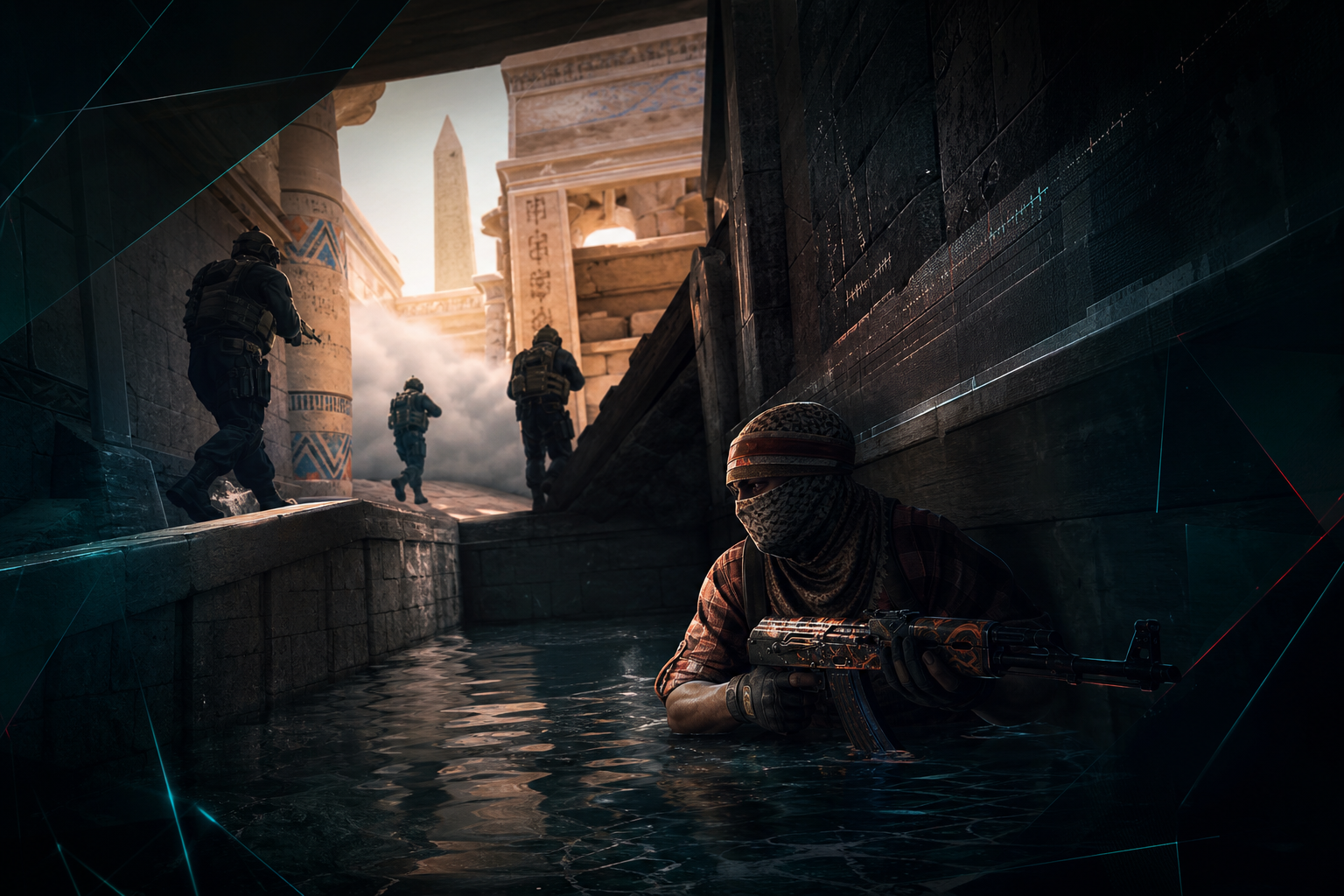
If you’ve ever gotten lost in Mirage mid while your team dies on A and the round somehow still feels winnable, you already know the problem: some maps punish a bad lurk way harder than others. Anubis doesn’t. That’s why lurking on Anubis feels so nasty in CS2 right now — the map gives you space, timing windows, and rotation pressure that Mirage just doesn’t hand out unless the other team is already asleep.
Mirage is the classic “everyone thinks they know it” map. Anubis is the one where one quiet T can make four CTs second-guess every sound cue they hear. With Source 2 subtick and cleaner peeks in CS2, the lurk role got sharper, not softer, and Anubis is basically built for a player who knows how to sit still, wait 12 seconds, then ruin everyone’s life.
Mirage loves structure. Anubis loves chaos.
That’s the whole argument, really. Mirage is an information map. If you lurk there, you’re fighting against a million defaults that every stack knows by heart: smoke top mid, hold connector, watch palace, clear underpass, rotate through ticket if A is hit. People have studied Mirage so long that even mid-round noisemaking gets read like a script.
Anubis is different. The map has more awkward routing, more weird sightlines, and more spots where one defender can’t cleanly cover two things at once. B main pressure, mid splits, canal timings — it all spreads CT attention thinner. A lurker doesn’t just flank on Anubis. He compresses the map.
Why Mirage makes lurking feel fake
On Mirage, if your lurk timing is off by five seconds, the round often dies right there. You’re stuck in apps while the hit has already gone in, or you’re late from connector while the CTs have already reset. And because Mirage is so often played with heavy mid control, your “silent pressure” can turn into dead air. The enemy’s already posted for it.
- CTs clear Mirage flanks on autopilot.
- Mid is too contested to hold for free.
- Connector rotations are fast and obvious.
- One missed timing and you’re just isolated in apps for no reason.
Anubis gives lurkers actual room to work
On Anubis, a good lurker can affect the round without even shooting. That sounds dramatic, but it’s true. A guy sitting canal or sneaking up mid can pull utility, freeze rotations, and open a site hit just by being alive at the right time. The map’s shape gives you more believable late-round routes, and that matters a ton in CS2 where subtick makes those tiny timing edges feel even more brutal.
There’s also the simple fact that many teams still don’t fully respect Anubis spacing. Even in Premier, you’ll see players over-rotate off noise because they’re not yet disciplined enough to trust the mini-map and the clock. That’s free value for a lurker. If you can make one CT turn his head, the round starts tilting.
The best lurking spots on Anubis
You don’t need a highlight-reel ace spot. You need places that force bad decisions.
- Canal: Great for timing flanks into A and catching rotators off the bridge.
- Mid/B doors area: Lets you punish overextended pushes and keep pressure on both sites.
- Late A-wraps: If your team shows presence elsewhere, this route gets ugly for CTs fast.
- Under-rotations: Not a spot, sure, but this is the whole point. Sit on the map like a tax collector and make them pay.
The key is that Anubis lets you make your lurk feel connected to the round. You’re not just hoping the enemy forgets to clear you. You’re forcing them to choose between two disasters.
CS2 subtick made patient lurks stronger
People still talk about “old CS” timings like they matter the same way. They don’t. In CS2, subtick means the feel of peek timing and counter-strafing is more exact, which makes patient lurking even more annoying to deal with. A CT holding a tight angle on Mirage can often spam a common timing and get away with it. On Anubis, the lurker can hold that same timing a little longer, then swing into the exact moment the rotate is late.
That’s why players like s1mple and ZywOo have always looked so dangerous when they’re reading rotations rather than just dry-peeking. The best lurkers aren’t necessarily the ones with the flashiest aim. They’re the ones who understand when the round is actually becoming unstable. donk does this too, just in a more violent, bulldozer kind of way — he collapses space. A strong Anubis lurk does the same thing, just without the headshot montage.
And let’s be real: with the 64-tick baseline and subtick handling the microstuff, a sloppy lurk on Mirage gets exposed faster because the map is already too solved. On Anubis, the map itself still has enough weirdness that your timing can carry harder than your raw aim for once.
Economy matters more on Anubis than people think
Lurking isn’t just about being sneaky. It’s about stealing round value. That’s why the economy side matters so much. If you’re on T side and your team buys a standard 2-1-2 spread with one lurk, you’re often investing $300–$800 in utility and a rifle that needs to create map pressure. On Anubis, that pressure tends to pay back. On Mirage, a lot of the time it just gets converted into a passive retake setup and the lurk never really matters.
Think about the round flow:
- If your lurk forces a CT to hold back, that’s one less rifle on the site hit.
- If he gets a rotation, your team can hit the weaker bombsite with cleaner post-plants.
- If he dies late, he still might’ve burned 20 seconds and two pieces of utility.
That’s not fluff. In a close CS Rating grind, those tiny gains are the difference between a 13-9 win and a stupid 11-13 loss where everybody starts typing about teammates instead of the round. Premier games are brutal like that.
Mirage lurks are more predictable than people admit
Mirage has too many “correct” lurk routes, which is exactly why they become boring. Apps, underpass, connector, palace timing — every decent team knows the usual suspects. Even in pro play, if a lurker overcommits on Mirage, the whole map can collapse because the defenders already have the read. That’s why Mirage often turns into a mid-control slugfest instead of a true split-and-flank map.
Anubis doesn’t reward that same predictability. You can threaten canal, fake mid presence, then reappear in a place that actually matters. You can stall B rotators while your team starts walking A. You can sit quiet, let the CTs get antsy, and then punish the first guy who swings for info. It’s less about memorizing a route and more about understanding what the defense is scared of right now.
That’s also why Anubis shows up in more “messy” wins at the amateur level. Teams don’t need perfect structure to get something out of a lurk. They just need a player who understands timing and isn’t rushing his own job like it’s a deathmatch highlight.
So when should you lurk on each map?
Easy answer: lurk on Mirage only when your team already has clean mid pressure or you know the CTs are overrotating. Otherwise, you’re often just standing in a lane waiting for someone to clear you properly. On Anubis, lurking is the default good idea more often than not, because the map gives you extra ways to threaten the round without being directly involved in the main hit.
If you want the blunt version:
- Mirage: lurk when the round is already breaking open.
- Anubis: lurk to help break it open.
That’s the difference. Mirage wants structure first, deception second. Anubis happily flips that order and still works.
If you’re trying to climb Premier or just stop losing those annoying 12-12 rounds, ask yourself this: are you lurking where the map wants you to, or where the map lets you actually matter?