 Sign in with Steam
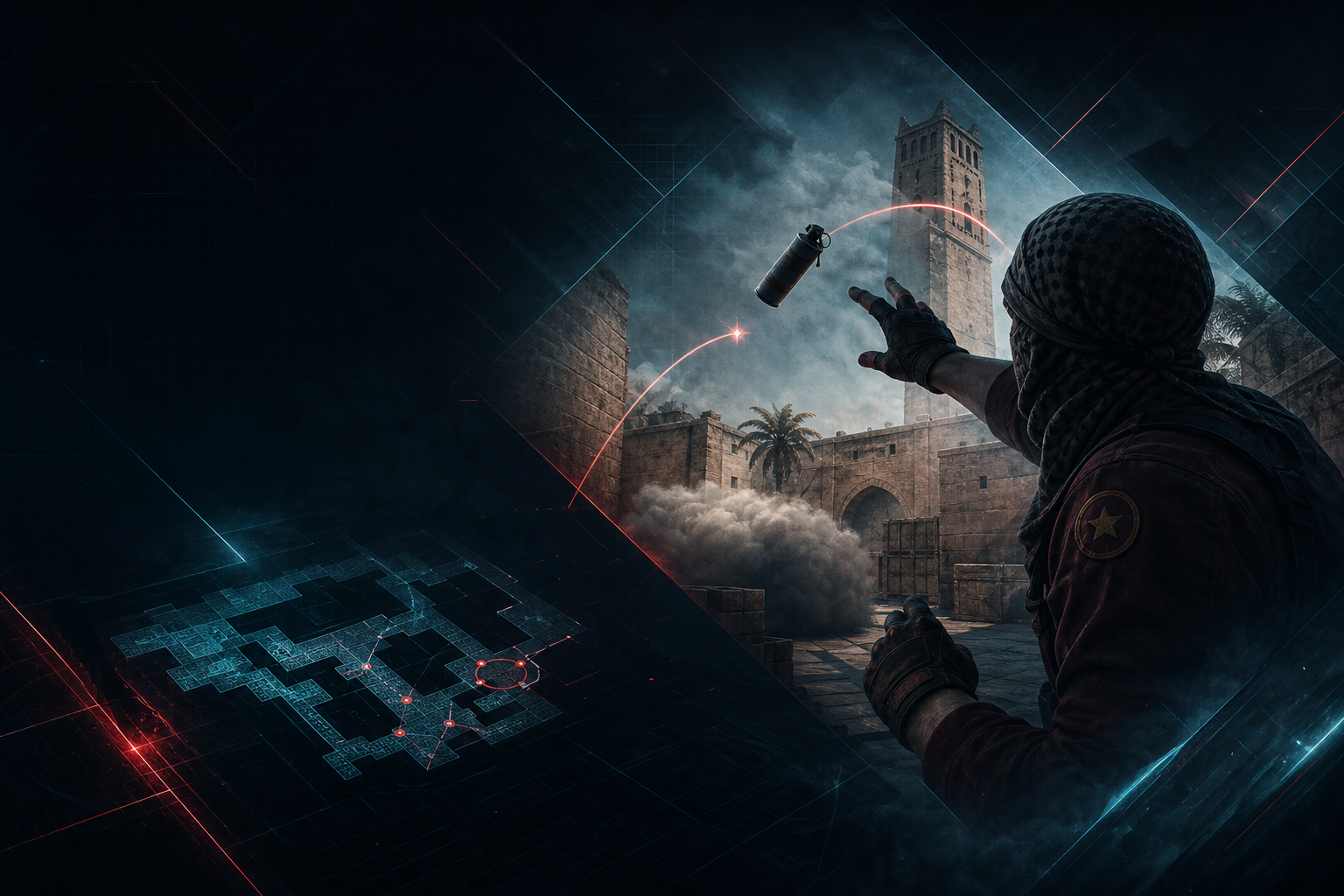
The weirdest part about CS2 smoke timing isn’t that people complain about it. It’s that you can still feel the old 64 tick muscle memory kicking in when a smoke blooms a hair later than you expected, and suddenly your exec is off by half a beat. You throw the Mirage window smoke, you jiggle palace timing like you’ve done a thousand times, and the gap between “safe” and “dead” feels different even if the server is technically running subtick. That’s the whole CS2 smoke story in one sentence: the numbers changed, but the human timing game still rules everything.
What 64 tick used to mean for smoke timing
Back in CS:GO, 64 tick was the ugly little standard that shaped half the competitive player base. If you played Matchmaking, Faceit level grind, or even just scrimmed on budget servers, you learned that 64 tick meant fewer simulation points per second, so some actions felt a touch less crisp than on 128 tick. Smokes were a huge part of that feeling. Lineups had to be cleaner, and tiny timing differences showed up when you were trying to pop a smoke, flash over it, or cross right as it landed.
That old 64 tick feel became muscle memory for millions. A lot of us learned to compensate without even thinking about it. On Inferno, you’d throw the top banana smoke, count the bounce, and know exactly when the CTs would lose vision. On Ancient, that mid smoke had a rhythm. You didn’t just throw utility; you performed it.
CS2 changed the engine, not the anxiety
Source 2 and subtick were supposed to clean all this up, and in a lot of ways they did. CS2 records action timing more precisely than old-school tick-based movement, which means your input gets captured more faithfully than the old “wait for the next tick” system. That sounds like it should make smoke timings obvious, but the weird part is that perception matters as much as math. If a smoke lands at the same place but your brain expects the old 64 tick cadence, it still feels late.
Valve also changed how some visuals and utility interactions read on your screen. The smoke volume itself looks more dynamic, and the edges are easier to read than the old CS:GO blobs, but that doesn’t mean every timing question got simpler. You can still get caught trying to shoulder peek through a fresh smoke on Nuke outside and think, “that should’ve popped a second ago.” Sometimes it has. Sometimes you’re just desynced from the pace.
So what actually changed?
- Smokes are more consistent visually, but the timing feel is less about raw tick and more about animation + input registration.
- Your lineup doesn’t magically become easier. A bad smoke on Mirage still ruins an A hit, no matter how pretty the particle effect looks.
- Counter-utility matters faster. If a CT knows the execute is late by even 0.5 seconds, they’ll swing while your riflers are still lining up.
- Post-plant timings are sharper, especially when a molly and smoke overlap near default on maps like Dust2 and Anubis.
Why your smoke feels late on 64 tick servers
Here’s the part people keep mixing up: “64 tick feel” doesn’t mean CS2 is somehow running like an ancient MM server from 2017. It means your timing instincts are built around a certain rhythm, and CS2’s subtick-driven behavior can expose when your execution is sloppy. If you’ve got one guy throwing from T spawn, one guy running late from top mid, and your AWPer is still posted in spawn like it’s a pug with no caller, the smoke will always feel bad. The engine isn’t the problem there. Your exec is.
That said, some utility sequences really do punish hesitation more than they used to. On Overpass B, if your monster smoke and flash aren’t chained tight, CTs can spam through the gap or even swing before the smoke fully matters. On Vertigo, a late A ramp smoke is basically a donation to the defense. In CS2, the margin for “we’ll be fine if it’s close enough” is smaller than people want to admit.
And yeah, this is where a lot of bad takes show up. People blame the game, but they’re actually throwing utility like they’re saving for a Galil round. If you’ve got 2,400 on the T side and you’re buying a smoke, flash, and half armor while your entry has a MAC-10, you need that smoke to land on time because there’s no money to fix the hit after it falls apart.
Where pro play makes it obvious
Watch any Major and you’ll see how little room top teams leave for timing errors. donk doesn’t wait around for a smoke to “probably” be good enough. He chains pressure immediately. m0NESY on CT side will punish a one-beat delay before an execute even gets fully set. ZywOo is absurd at reading utility tempo too, which is why his teams don’t just have great aim — they have great timing discipline.
At the PGL Copenhagen Major, utility sequencing was brutal to watch in the best way. Teams weren’t just throwing standard smokes; they were layering them to force reactions. If a team was half a second late on a window smoke or a deep connector piece, the round often collapsed before the rifle duel even started. That’s the level CS2 has pushed everyone toward. The smoke isn’t just cover anymore. It’s a timer, a script, and a trap.
That’s also why the old “just default for 45 seconds” style feels weaker in CS2 Premier. With CS Rating pressure and round-by-round economy tighter than ever, every second you waste is another chance for a CT to take space, farm damage, and turn a 2,900 loss bonus round into a mess.
How to stop fighting the timing and start using it
If your smokes feel off, don’t just spam the same lineup and hope the Source 2 fairy fixes it. Clean up the timing chain. One player counts, one player throws, one player swings. That’s it. The better your call structure, the less you care about whether the smoke feels like old 64 tick or not.
Try this instead:
- Call your execute on a hard count. “3, 2, 1” actually matters.
- Throw utility from consistent spots. Don’t freestyle from random pixels because you saw a TikTok clip.
- Practice your follow-up timing with a buddy on Mirage or Inferno. One guy throws, one guy entries, one guy watches the clock.
- Record the round. If the smoke is late, you’ll see whether it’s the throw, the pathing, or your whole group arriving at different times.
The best teams don’t ask, “does this smoke feel like 64 tick?” They ask, “can we exploit the defender’s reaction window before the smoke matters?” That’s a much better question. It’s the same reason pro CS always looks cleaner than ranked chaos: their utility is tied to a purpose, not just a lineup screenshot.
The real change is mental, not magical
CS2 smoke timing on 64 tick feel changed because the game changed, sure, but also because players refuse to let go of old habits. We’ve all got that CS:GO ghost in our head saying a smoke should pop right now, and when it doesn’t match the memory, it feels wrong. That doesn’t mean the new system is broken. It means your brain is still calibrated to a dead rhythm.
Once you stop treating smokes like a fixed stopwatch and start treating them like part of a live, messy round plan, the whole thing makes more sense. The gap between a good execute and a bad one is usually one player late, one flash missed, or one guy peeking before the smoke actually does its job. That’s CS2 in a nutshell.
So the real question isn’t whether CS2 smoke timing “feels” like 64 tick. It’s whether you’re still playing as if the smoke will save you after the round has already moved on.